


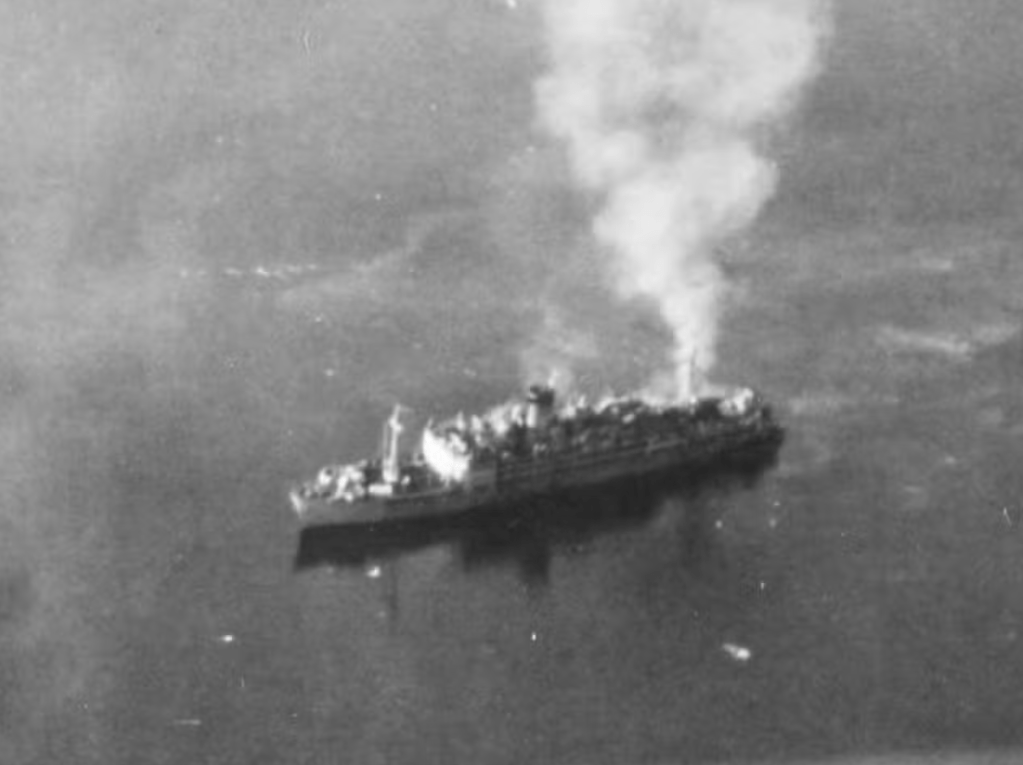
SUBBIC BAY, Philippines — Over 80 years after it was sent to the bottom of the sea, the wreck of a Japanese “Hell Ship” is the focus of a major recovery mission. The United States, in partnership with the Philippine government, has returned to Subic Bay to retrieve the remains of American prisoners of war (POWs) trapped within the sunken Oryoku Maru.
The Tragedy of the Oryoku Maru:
The vessel was one of several Japanese transport ships used during World War II to move POWs under brutal, unventilated conditions.
- The Sinking: On December 15, 1944, unaware that the ship was carrying 1,619 allied prisoners, U.S. Navy aircraft attacked and sank the vessel near Olongapo.
- The Toll: Records indicate that 286 POWs were reported dead or missing following the attack. Many drowned or were killed in the cargo holds during the bombardment.
The Recovery Mission:
Led by the Defense POW/MIA Accounting Agency (DPAA) and the U.S. Navy, the operation is described as one of the “largest and most complex” underwater recoveries to date.
- Technical Challenges: Divers are using advanced mapping and forensic techniques to navigate the wreckage and retrieve remains and artifacts with “utmost care and dignity.”
- Forensic Identification: Recovered remains will be sent to specialized U.S. laboratories for DNA testing and forensic anthropology.
- Progress: Recent efforts have already successfully identified several soldiers, including Cpl. Floyd Dunning, Lt. Col. Louis Roemer, Capt. Paul Pearson, and 2nd Lt. Charles Arnao. Capt. Pearson is scheduled to be buried with full military honors at Arlington National Cemetery.
Enduring Partnership:
Capt. Barrett Breland, the DPAA team leader, stated that the mission represents a “solemn commitment” to the families of the fallen. The operation also highlights the deep historical ties and ongoing alliance between the U.S. and the Philippines in honoring those who served during the Pacific War.
As the mission continues, rosettes will be placed next to the names of the identified soldiers at the Manila American Cemetery, providing long-awaited closure for their descendants.