

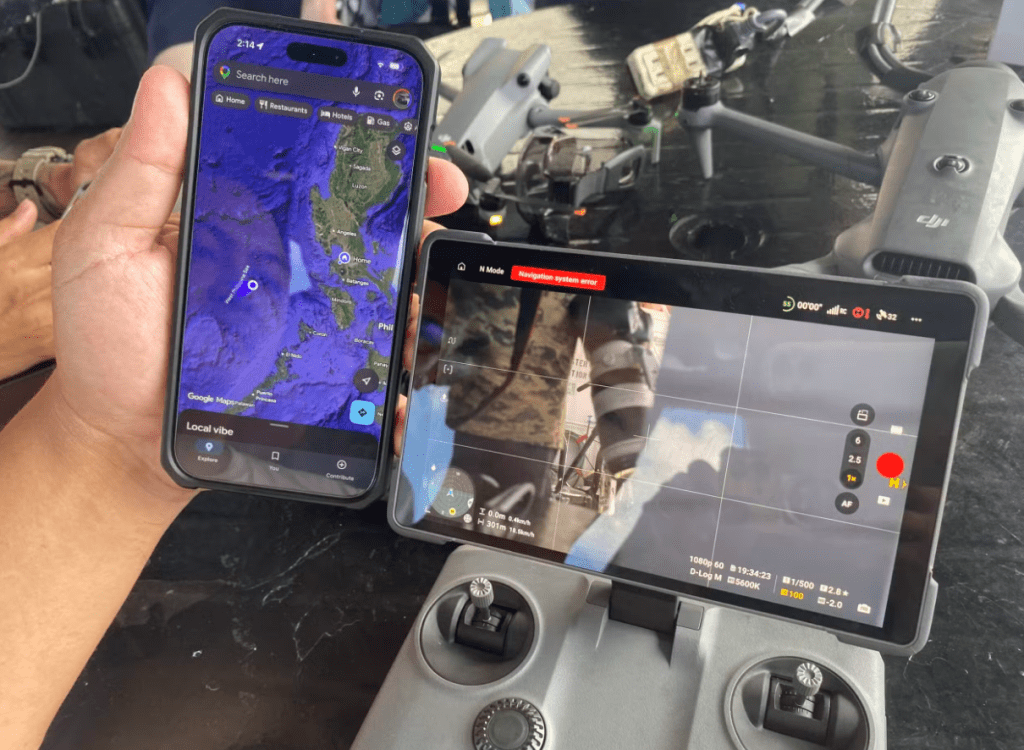
A drone deployed by the “Atin Ito” coalition during its latest mission in the West Philippine Sea encountered unexpected technical failures, with organizers suggesting possible signal interference from Chinese civil aviation authorities. The incident occurred as the civilian-led group attempted to document their maritime journey, which aims to assert Philippine sovereign rights through peaceful civilian presence.
Technical teams operating the drone reported a “system error” that prevented the aircraft from maintaining a stable connection and completing its flight path. According to the coalition, the malfunction was unusual and coincided with the presence of Chinese vessels in the vicinity. Organizers raised concerns that the Civil Aviation Administration of China (CAAC) or nearby Chinese assets may have employed signal-blocking technology to disrupt the drone’s operations.
The drone was intended to provide aerial footage of the civilian convoy and monitor the surrounding waters for any potential challenges or blockades. The sudden loss of control and the specific nature of the system error led the mission’s technical experts to conclude that external electronic interference was a highly likely cause, rather than a standard hardware or software glitch.
The “Atin Ito” coalition, composed of fisherfolk, advocates, and youth leaders, emphasized that despite the technical setback, the primary mission of the convoy remains unaffected. The group continues to navigate toward its designated areas to distribute supplies to local fishing communities and reinforce the Philippine presence in the region.
This development adds another layer of tension to the ongoing maritime activities in the West Philippine Sea. While the CAAC has not issued an official response to the allegations of signal jamming, the incident highlights the increasingly complex environment civilian missions face, involving not just physical naval presence but also electronic and technical challenges.