
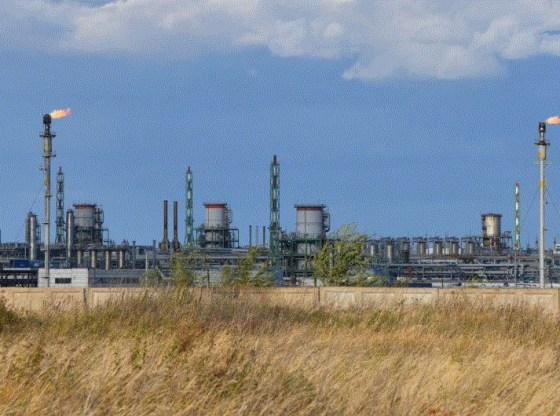

Austria announced that Russia will suspend its gas deliveries starting Saturday, marking a significant shift in Moscow’s dwindling energy exports to Europe. The move effectively ends Austria’s reliance on Russian gas, which had persisted even as other European nations reduced imports after Russia’s 2022 invasion of Ukraine.
End of a Long-Standing Relationship
Russia’s decision signals a historic break in a relationship that began in 1968 when Austria became the first Western European country to purchase Soviet gas. This year, a contractual dispute between Russia’s Gazprom and Austria’s OMV has led to the suspension.
OMV confirmed the development via a notice on the Central European Gas Hub platform, stating that it has been preparing for such an eventuality by securing gas supplies from Germany, Italy, and the Netherlands.
Broader Implications for Austria
The loss of Russian gas is expected to exacerbate Austria’s ongoing energy crisis, which has already led to reduced gas demand and significantly affected the manufacturing sector. Analysts at Eurointelligence noted:
“Austria’s economy is currently stuck in recession. Germany is sneezing, and Austria is catching the cold.”
While Austria remains one of the few European nations still dependent on Russian gas, the EU has made strides in diversifying its energy supply since the war in Ukraine began.
Russian Gas in Decline Across Europe
Russia once supplied 40% of the EU’s gas needs but now primarily exports to Hungary and Slovakia. Gas flows to Europe have been drastically reduced since the destruction of the Nord Stream pipelines in 2022 and the EU’s push for alternative energy sources.
In 2023, Russia supplied 15 billion cubic meters (bcm) of gas via Ukraine, representing just 8% of its peak exports to Europe in 2018-2019. Austria and Slovakia remain heavily reliant on this route, which Ukraine has said it will not extend beyond 2025.
Hungary has shifted most of its gas imports to the TurkStream pipeline via the Black Sea, while Slovakia continues to receive gas through Ukraine.
Russia Open to Negotiations
Russian President Vladimir Putin recently spoke with German Chancellor Olaf Scholz for the first time since December 2022. The Kremlin signaled a willingness to discuss energy deals if Germany shows interest, stating:
“Russia has always strictly fulfilled its treaty and contractual obligations in the energy sector and is ready for mutually beneficial cooperation.”
EU Confident in Alternatives
EU Energy Commissioner Kadri Simson expressed confidence in Europe’s ability to manage without Russian gas. Speaking at a UN climate conference, she said:
“Alternative supply is available, and there is no need for the continuation of Russian gas transiting via Ukraine to Europe.”
As Austria transitions away from Russian energy, the country faces an uphill battle in stabilizing its energy supply and recovering from the broader economic impact.