


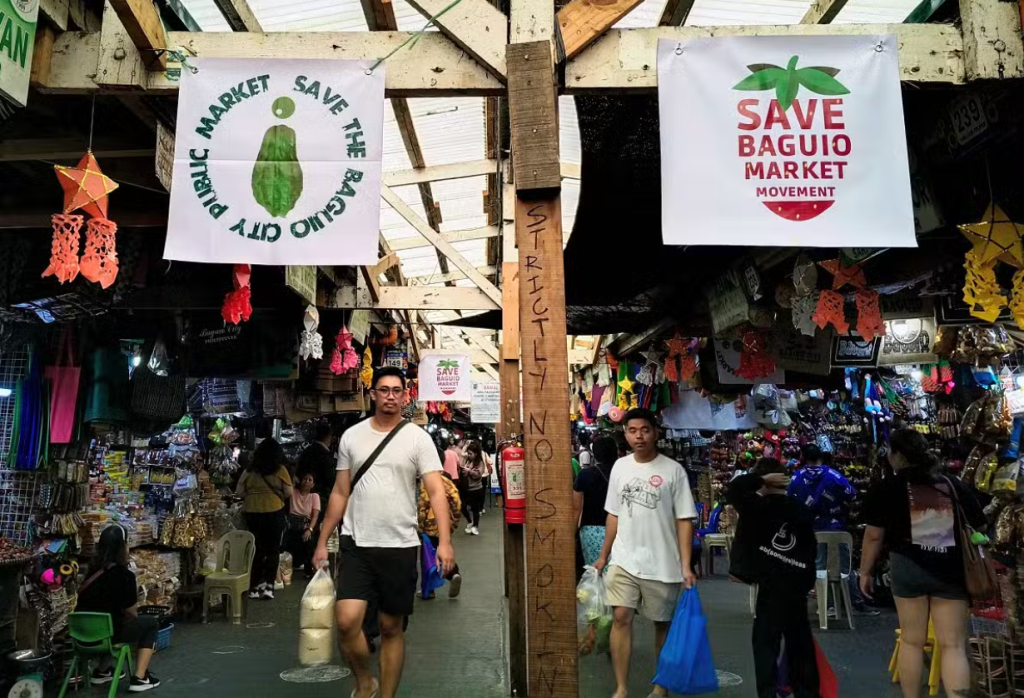
BAGUIO CITY – Amid the misty chill and bustling haggling that defines this mountain city’s soul, over 200 vendors from the iconic Baguio City Market are raising their voices in a united front, demanding a seat at the table – or rather, the blueprint – for the long-overdue P4 billion upgrade of their aging livelihood hub. In a petition that’s as bold as the fresh strawberries they peddle, the group insists on co-chairing the project’s technical working group (TWG), transforming what could be a top-down facelift into a grassroots renaissance that honors the sweat and stories woven into every stall.
The call to action, formalized in a letter to Mayor Benjamin Magalong on Wednesday, stems from a deep-seated frustration with past consultations that felt more like polite nods than real partnerships. “We’ve been here for generations, breathing life into this market since our grandparents’ time – we’re not just sellers; we’re the heartbeat,” declared Alma “Nanay Alma” Santos, a 62-year-old vegetable vendor and spokesperson for the Baguio Vendors Association. “If this upgrade is truly for us, let us lead it. We’ve got the scars from typhoons and the smarts from surviving slumps – why sidelined us now?”
The P4 billion blueprint, greenlit by the city council last month, envisions a seismic shift for the 75-year-old market: Modern wet and dry sections with climate-resilient roofing, energy-efficient cooling to combat the summer sizzle, and eco-friendly waste systems to tame the daily deluge of peels and packaging. Slated for phased rollout starting mid-2026, it promises to swell the 3.5-hectare space by 20% while preserving the warren-like charm that lures 5,000 shoppers daily. But vendors like Santos fear a glossy overhaul could jack up rents – already P500-P1,000 monthly per stall – or displace the small-timers who make up 70% of the 1,200-strong collective.
Their demands? Crystal clear and punchy: Co-chair the TWG alongside city engineers, veto any design that hikes costs without subsidies, and bake in relocation perks during construction – think pop-up stalls or waived fees for the six-month build window. “We’ve seen markets in Manila turned into malls that priced out the little guy,” chimed in Ramon “Kuya Mon” Cruz, a 45-year meat butcher whose family has slung slabs here since the ’80s. “This isn’t about resisting change; it’s about owning it. Give us veto power, and we’ll make this the envy of every highland trader.”
Magalong, no stranger to vendor woes after his own stint as a market regular, responded with measured optimism during a quick huddle at City Hall. “Their input is gold – we’ve already looped them into early sketches, but co-chairing? That’s a fresh angle we’ll chew on,” the mayor told reporters, his fogged glasses betraying a thoughtful pause. “This upgrade isn’t a bulldozer job; it’s a bridge to sustainability. If elevating their voice gets us there faster, count me in.” Behind the scenes, the city is eyeing a mix of loans from the Development Bank of the Philippines and green bonds to foot the bill, with vendor reps potentially fast-tracking the environmental impact assessment due by March.
For these resilient hawkers – who weathered COVID lockdowns by pivoting to deliveries and now battle inflation’s bite on everything from carrots to carabao – the petition is more than paperwork; it’s a power play. As Baguio’s tourism rebounds to pre-pandemic peaks, drawing 2 million visitors yearly to its flower-lined streets, the market stands as the unpolished jewel in the crown. Will the vendors’ chorus tune the TWG’s tempo, or will it fade into the fog? One thing’s certain: In this city of eternal spring, the push for a market reborn feels like the next big bloom.