
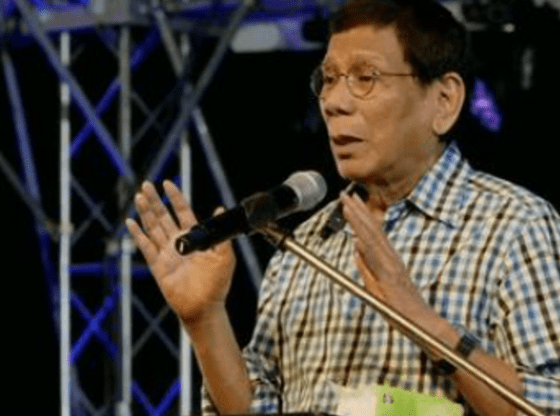

Former Philippine President Rodrigo Duterte recently addressed misconceptions about his suggestion for Mindanao’s secession, emphasizing its legality and peaceful intentions. Speaking with attorney Salvador Panelo, Duterte underscored that his advocacy for Mindanao to become independent from the Philippines was a lawful procedure, intended to be presented before the United Nations, drawing parallels with Timor Leste’s process.
Duterte refuted the notion that secession would lead to conflict, stating, “There’s a misconception that secession equals war. That’s not the case. We aim to pursue this through legal, internationally recognized processes.”
Addressing concerns that his proposal violates the 1987 Constitution, Duterte argued that the move was not unconstitutional but rather existed outside its framework, anchored in the principle of self-determination. “Secession is about exercising the right to self-determination, not about breaching constitutional laws,” he explained.
The conversation shifted when Duterte clarified his stance towards President Ferdinand “Bongbong” Marcos Jr., denying any intentions to oust him. His critique was solely on Marcos’s approach to amending the Constitution, not personal animosity. Meanwhile, Marcos, during the “Constitution Day 2024” event, vehemently opposed the call for Mindanao’s separation, labeling it a constitutional violation and a baseless endeavor.
Furthermore, Duterte touched upon the International Criminal Court’s (ICC) ongoing investigation into the anti-drug campaign during his presidency. He boldly stated he would resist any arrest attempt by the ICC, questioning their jurisdiction and authority in the Philippines. This stance is supported by the Philippine National Police (PNP) and President Marcos, both expressing non-recognition of the ICC’s jurisdiction, viewing it as a sovereignty issue.
Solicitor General Menardo Guevarra also weighed in, highlighting the logistical challenges of enforcing any ICC-issued warrant against Philippine officials, aligning with the President’s directive to maintain national control over such legal matters.
Duterte’s interview sheds light on his views regarding Mindanao’s secession, legal challenges against international judicial bodies, and the dynamics of national sovereignty, stirring a mix of legal, political, and constitutional discussions within the Philippines and beyond.