


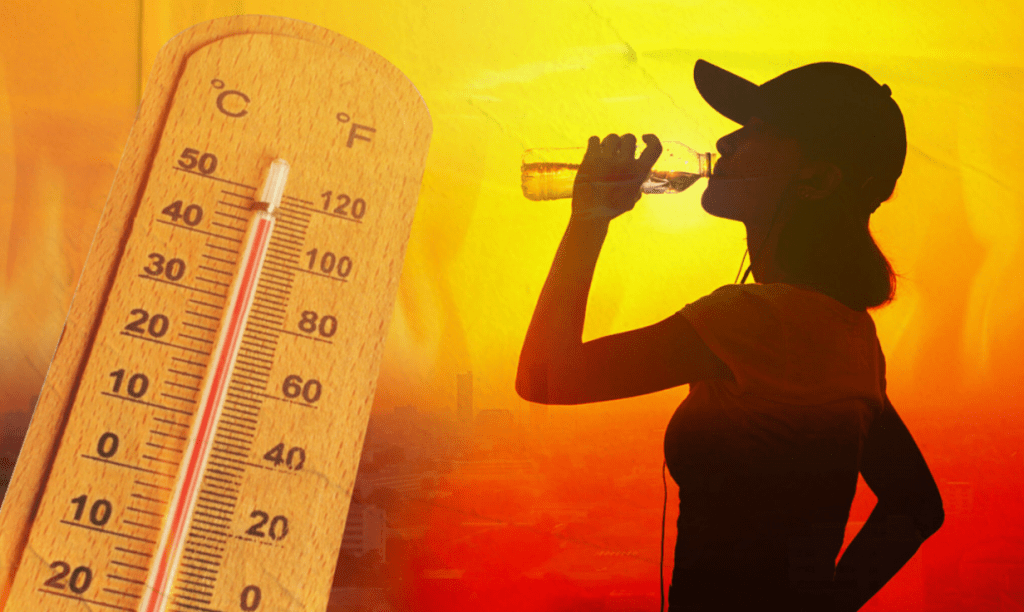
BORONGAN CITY, Philippines — Sustaining a brutal stretch of extreme weather that continues to strain the local power grid and threaten public wellness across the Eastern Visayas, regional temperatures have spiked yet again. Borongan City recorded a scorching 45°C (113°F) heat index, pushing the provincial capital deep into the state weather bureau’s official “Danger” classification zone.
The extreme metric was documented early Monday afternoon at the local PAGASA synoptic station, marking the third consecutive day the coastal city has breached dangerous heat thresholds.
The heat index, widely referred to as the “real-feel” temperature, calculates the combined impact of relative humidity and ambient air temperature to measure how hot it actually feels to the human body.
PAGASA categorizes heat metrics into four distinct physiological effect levels:
                  [ PAGASA HEAT INDEX CLASSIFICATION ]
                                   │
         ┌─────────────────────────┼─────────────────────────┐
         ▼                         ▼                         ▼
   [ 27°C to 32°C ]          [ 33°C to 41°C ]          [ 42°C to 51°C ]
  • **Caution Zone**        • **Extreme Caution**     • **The Danger Zone**
  • Fatigue is possible     • Heat cramps and heat    • **Borongan is at 45°C.**
    with prolonged exposure   exhaustion are highly     Heat stroke is imminent
    and physical activity.    likely with active use.   with ongoing exposure.
When local systems hit the 42°C to 51°C Danger bracket, the human body loses its capacity to efficiently cool itself through sweating, drastically accelerating the onset of severe heat-related medical emergencies.
Borongan City’s geographic position makes it uniquely vulnerable to massive spikes in real-feel metrics compared to inland or elevated mountain towns.
                         [ BORONGAN MICRO-CLIMATE COMPOSITION ]
                                           │
         ┌─────────────────────────────────┴─────────────────────────────────┐
         ▼                                                                   ▼
   [ PACIFIC WATER EVAPORATION ]                                       [ THE STAGNANT AIR BLANKET ]
   • **The Humidity Multiplier:** High coastal evaporation rates from   • **Weak Thermal Winds:** Prevailing wind currents have temporarily
     the adjacent Philippine Sea trap massive amounts of moisture in     weakened, preventing cooler maritime air from circulating into the
     the low-level atmosphere.                                           dense urban centers of the city.
   • **The Real-Feel Engine:** When high ambient temperatures combine  • **The Concrete Heat Sink:** Urban surfaces like asphalt roads and
     with extreme moisture, the air becomes highly saturated, spiking    uninsulated rooftops store thermal energy, compounding the daytime
     the local heat index.                                               temperature load.
In response to the prolonged heatwave, the Borongan City Health Office has activated emergency response protocols, mobilizing barangay health workers to monitor vulnerable populations, including senior citizens and toddlers.
| Primary Heat Risk | Common Warning Signs | Immediate First-Aid Mitigation |
| Heat Exhaustion | Heavy sweating, dizziness, a rapid or weak pulse, nausea, and painful muscle cramps. | Move the victim immediately to an air-conditioned room or shade; loosen tight clothing; apply cold compresses. |
| Heat Stroke (Critical) | High body temperature (above 40°C), confusion, loss of consciousness, and dry, hot skin. | Call emergency hotlines instantly. Deliberately douse the patient with cool water or ice packs while waiting for transit. |
Local education officials are closely coordinating with school heads regarding the active implementation of alternative learning modalities, allowing campuses to transition to remote classes if classroom heat levels pose direct safety threats to students. Residents are strongly urged to stay indoors between 10:00 AM and 4:00 PM, carry umbrellas or hats when navigating open spaces, and drastically ramp up water intake while avoiding dehydrating liquids like coffee, tea, and sugary sodas. With local forecasting models indicating that high humidity tracks will persist across Eastern Samar over the coming days, the community remains on high alert to prevent avoidable thermal casualties.