


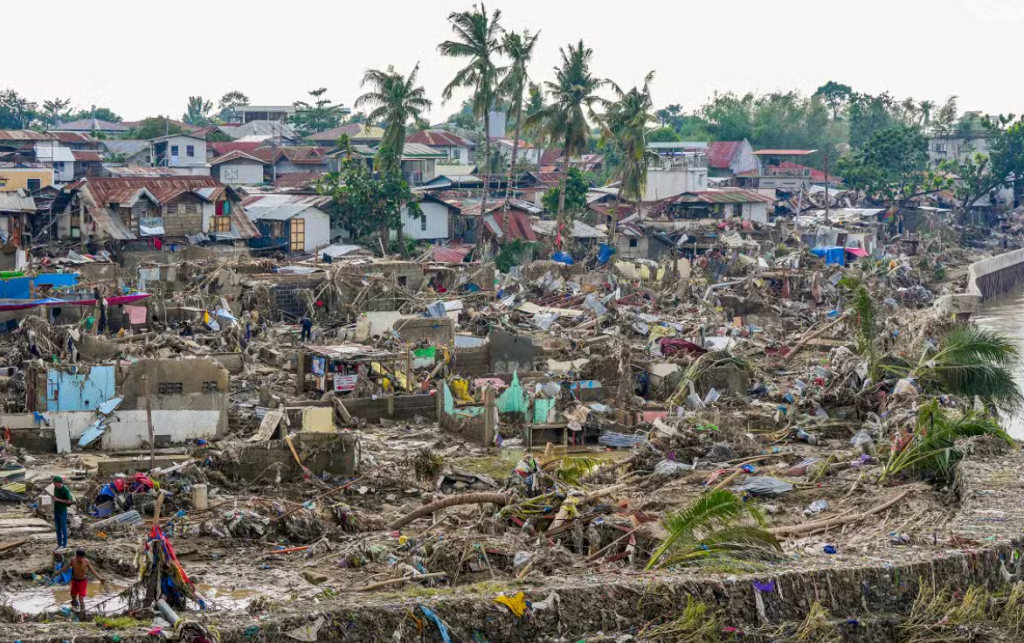
Despite the different names, hurricanes, cyclones, and typhoons all refer to the same type of powerful storm: the tropical cyclone. The difference lies primarily in where they occur. For example, these storms are called hurricanes when they form in the North Atlantic or Northeast Pacific. They’re known as typhoons in the Northwest Pacific region. And in the South Pacific and Indian Oceans, the term cyclone is used.
The basic mechanics are the same: each storm develops over warm tropical waters, drawing energy from the heat and moisture of the ocean surface. As the system organizes, it can intensify into a large rotating low‑pressure system with strong winds and heavy rain.
One interesting feature is how rotation direction depends on hemisphere: in the Northern Hemisphere, these storms spin counter‑clockwise, while in the Southern Hemisphere they spin clockwise.
What really changes is classification and naming. Once sustained winds exceed a certain threshold (for example, 74 mph or 119 km/h), the storm is designated with the appropriate regional label.