
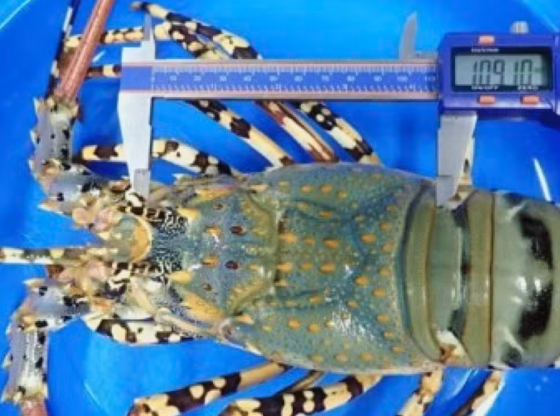

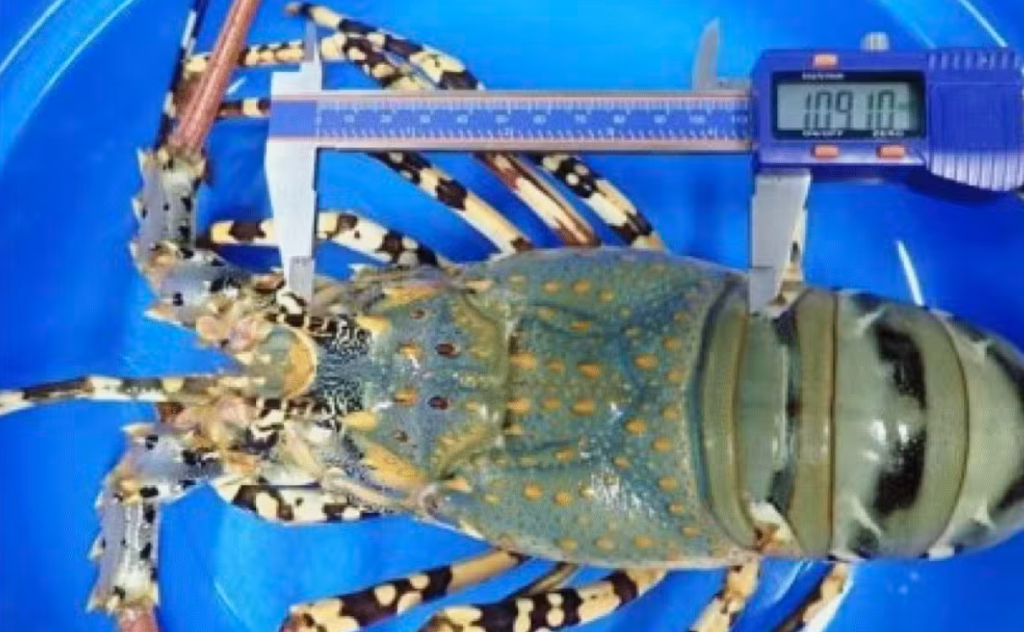
TIGBAUAN, Iloilo — The Southeast Asian Fisheries Development Center-Aquaculture Department (SEAFDEC/AQD) is pioneering research to develop standardized, science-backed farming techniques for the spiny lobster (Panulirus ornatus), locally known as banagan or tiger lobster.
The project aims to transform the current informal and small-scale lobster farming practices in the Philippines into a sustainable high-value industry for coastal communities.
Key Research and Developments:
- Moving Beyond Traditional Methods: Current lobster farming in the Philippines relies heavily on collecting wild juveniles and using traditional, unstandardized cage methods. SEAFDEC/AQD Chief Dan Baliao noted the need for science-backed production models that define optimal stocking density, feeding schemes, and environmental management.
- Research Site: Testing is currently being conducted at the Igang Marine Station in Guimaras, which has been identified as a rich natural source of wild spiny lobster seeds.
- Establishing Benchmarks: Researcher Roselyn Baylon and her team have already established key growth benchmarks. They are currently evaluating the survival rates and socio-economic viability of sea-based cage systems during both the nursery and grow-out phases.
- Technology Transfer: Once protocols are refined and verified through large-scale trials, the center plans to facilitate technology transfer and training to help coastal fishers establish sustainable livelihoods.
Dr. Leobert de la Peña, head of the SEAFDEC/AQD Research Division, stated that the final goal is to create a reliable production cycle that can meet the high market demand for this premium seafood species.