


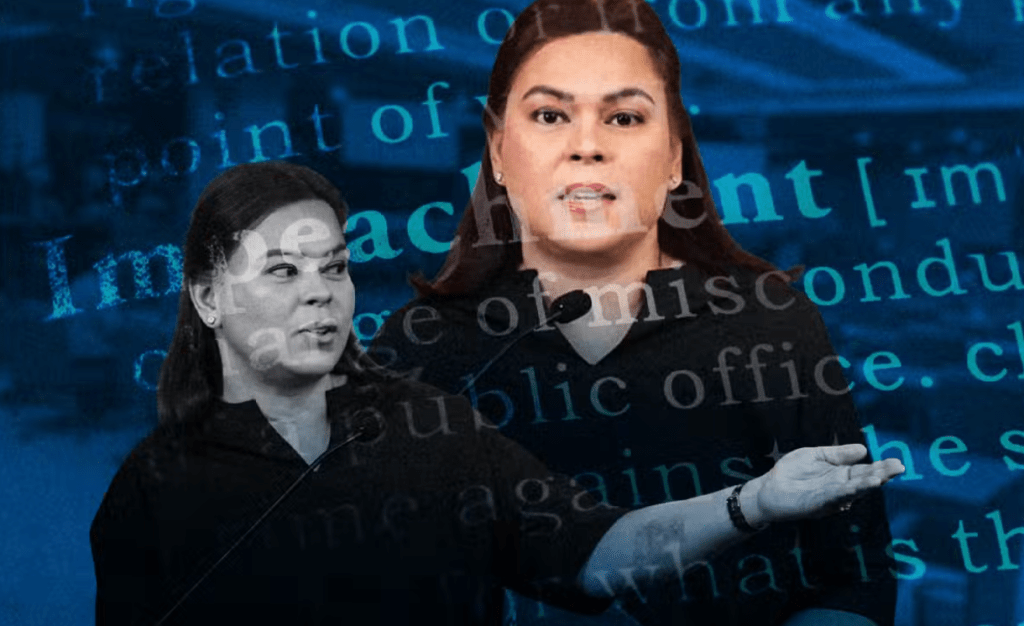
MANILA, Philippines — As the country braces for the upcoming impeachment trial of Vice President Sara Duterte, a key question dominates political discussions: Will senators who take highly controversial stands face unavoidable career ruin at the ballot box? Historical data suggests that a politician’s vote in high-stakes impeachment proceedings does not automatically dictate their long-term electoral survival.
The study, which looks back on one of the country’s most polarizing political chapters, indicates that voter behavior is far more complex and forgiving over time than conventional political wisdom assumes.
To determine if defining national votes trigger permanent electoral consequences, the analysis evaluated the political fates of senators who participated in the historic 2000–2001 impeachment trial of former President Joseph Estrada.
The research—conducted by Dr. Rogelio Alicor Panao, an associate professor and data scientist from the University of the Philippines (UP) Diliman—tracked Commission on Elections (Comelec) data following that trial:
                      [ POST-IMPEACHMENT ELECTORAL SURVIVAL ]
                                         │
         ┌───────────────────────────────┴───────────────────────────────┐
         ▼                                                               ▼
   [ THE GUILTY / ACQUITTAL BIAS ]                                 [ THE OUSTED PRESIDENT'S REBOUND ]
 • **No Uniform Punishment:** The data revealed no statistical proof • **The Ultimate Litmus Test:** The most striking piece of evidence
   that voting to convict or acquit Estrada doomed a senator's long- • is Estrada himself. Despite being impeached and eventually ousted,
   term career. Senators from both sides of the aisle successfully   • he placed a strong second in the 2010 presidential elections
   secured reelection in subsequent cycles.                          • and was later elected Mayor of Manila.
 • **Short Memory vs. Core Issues:** Dr. Panao’s analysis highlights • **Shifting Priorities:** Over time, local electorates consistently
   that local voters routinely prioritize immediate regional demands • substitute abstract constitutional stances with pragmatic,
   and visible governance milestones over past legislative trials.   • localized platform deliverables.
The publication of this historical breakdown coincides with immense institutional anxiety as the Senate prepares to formally begin Vice President Sara Duterte’s trial proper on July 6, 2026. The political stakes are already altering the baseline structure of the legislature:
[ THE 2026 IMPEACHMENT PREPARATION ECOSYSTEM ] │ ▼[ 1. Record House Tally ]──► The trial moves forward after a historic plenary vote at the House of Representatives, where a record-breaking **257 lawmakers** voted to officially adopt the Articles of Impeachment. │ ▼[ 2. Leadership Shake-Up ]──► The impending trial has already triggered extreme volatility within the upper chamber, culminating in a swift leadership change that installed Senator Sherwin Gatchalian as the new Senate President to oversee the impeachment court setup. │ ▼[ 3. The Quorum Debate ] ──► Heated legal and procedural debates are underway regarding the vote thresholds required for conviction, with some lawmakers arguing that the strict **two-thirds requirement (16 votes)** should be calculated based only on actively participating senator-judges.
While historical trends offer a sigh of relief to nervous politicians worried about their upcoming reelection bids, external watchdog groups are actively working to ensure lawmakers remain accountable.
The Makati Business Club (MBC) recently issued a sharp reminder to the chamber, stating that impeachment is one of the Senate’s most sacred constitutional mandates. The business coalition urged the newly installed leadership to prioritize democratic stability and independent, non-partisan evaluation over immediate, short-term political survival, concluding with a warning that regardless of subsequent election trends, “history will judge you by your actions during this critical period.”