
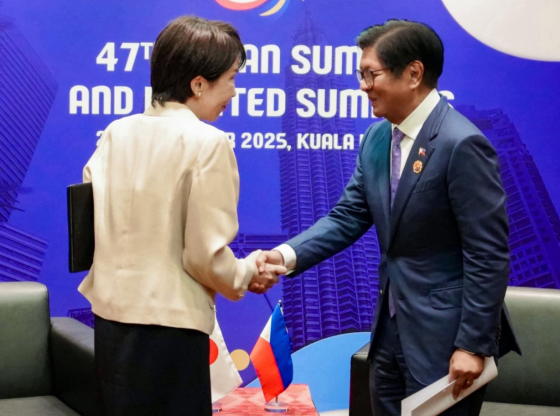


TOKYO, Japan — Japan has officially approved the state visit of Philippine President Ferdinand Marcos Jr., set for four days beginning May 26, 2026. The visit, announced on Saturday, April 25, 2026, by the Japanese Cabinet, marks a significant diplomatic milestone as Tokyo seeks to solidify its alliance with Manila amidst an “increasingly complex security environment” in the Indo-Pacific region.
Marcos Jr. will be the first state guest received by Japan since March 2025, highlighting the high priority Tokyo places on its partnership with the Philippines.
The four-day visit is packed with high-level engagements designed to showcase the depth of the bilateral relationship:
- Imperial Audience: President Marcos will meet with Emperor Naruhito and Empress Masako, followed by a prestigious banquet at the Imperial Palace.
- Bilateral Talks: The President will hold extensive discussions with Japan’s Prime Minister, Sanae Takaichi.
- Security & Strategy: Conversations are expected to focus on a shared commitment to a “free and open Indo-Pacific,” specifically addressing regional maritime security concerns.
- 70th Anniversary: The visit coincides with the 70th anniversary of the normalization of ties between Japan and the Philippines, serving as a celebration of seven decades of diplomatic growth.
Chief Cabinet Secretary Minoru Kihara emphasized that the visit is more than just ceremonial. Japan views the Philippines as a “strategic partner” that shares fundamental values and strategic interests.
- Assertive Regional Dynamics: The meeting comes as both nations navigate challenges posed by assertive territorial claims and shifts in regional power balance.
- ASEAN Collaboration: President Marcos has expressed a keen interest in leveraging Japan’s partnership to strengthen ASEAN-Japan ties, particularly in the areas of trade, infrastructure, and disaster resilience.
- Economic Evolution: Beyond security, the two leaders are expected to review ongoing joint infrastructure projects in the Philippines, including the Metro Manila Subway and various railway expansions funded by Japanese official development assistance (ODA).
Diplomatic sources indicate that the Takaichi-Marcos talks will reinforce the “strategic evolution” of Japan’s foreign policy, ensuring that the Philippines remains a central pillar of Tokyo’s outreach in Southeast Asia.
“Japan hopes the visit will further deepen the friendly and cooperative relationship between Tokyo and Manila as strategic partners who share fundamental values,” Kihara stated during a press conference.
This visit follows a series of high-level exchanges that have characterized the Marcos administration’s foreign policy, which has seen a marked pivot toward strengthening traditional alliances with Japan and the United States. The invitation of Marcos Jr. as a state guest—a status reserved for Japan’s most valued international partners—underscores the mutual recognition of the Philippines’ role in regional stability.