


OAKLAND, California — A high-stakes legal showdown between two of the tech industry’s biggest titans has concluded with a swift victory for the creators of ChatGPT. A federal jury in the U.S. District Court in Oakland rejected Elon Musk’s $150 billion lawsuit against OpenAI and its CEO, Sam Altman, effectively blocking the billionaire’s attempt to force the company to roll back its commercialized corporate structure.
The nine-member jury deliberated for less than two hours before delivering a unanimous verdict that found Altman, OpenAI, and President Greg Brockman not liable for Musk’s claims.
The legal battle capped off 11 days of highly publicized, tense testimony that exposed the deep fractures and historical infighting within OpenAI’s early leadership team.
- The Accusation: Musk, who co-founded OpenAI in 2015 as a nonprofit research lab before exiting in 2018, accused Altman and Brockman of abandoning the organization’s altruistic founding mission. He argued that the company’s multi-billion-dollar partnership with Microsoft effectively transformed it into a closed-source, commercial subsidy, claiming the executives essentially “stole a charity” to enrich themselves.
- The Defense: OpenAI’s legal team, led by William Savitt, successfully countered that a capped-profit structure was entirely necessary to fund the massive computing power, infrastructure, and top-tier research talent required to build advanced AI systems—costs far exceeding what a traditional nonprofit model could sustain. They framed Musk’s lawsuit as a “hypocritical attempt to sabotage a competitor” driven by commercial jealousy following his own failed attempt to take over OpenAI in 2018.
Despite weeks of intense debate over AI safety, contract law, and corporate ethics, the jury’s final decision ultimately hinged on a fundamental legal timeline.
[2017: OpenAI Begins For-Profit Talks] ──► [3-Year Statute of Limitations Expires] ──► [2024: Musk Files Lawsuit] ──► [RESULT: Dismissed as Too Late]
The jury found that Musk had exceeded the legal statute of limitations required to bring the case to court. OpenAI presented internal communications proving Musk was fully aware of the organization’s transition plans toward a for-profit arm as early as 2017. Under California’s three-year limit for such claims, the jury determined that Musk’s 2024 filing was submitted years too late.
Following the jury’s advisory finding, U.S. District Judge Yvonne Gonzalez Rogers stated there was a “substantial amount of evidence” supporting the decision and immediately dismissed Musk’s remaining claims on the spot.
The decision clears a massive roadblock for OpenAI, giving the company an unencumbered pathway to pursue going public later this year at a projected $1 trillion valuation.
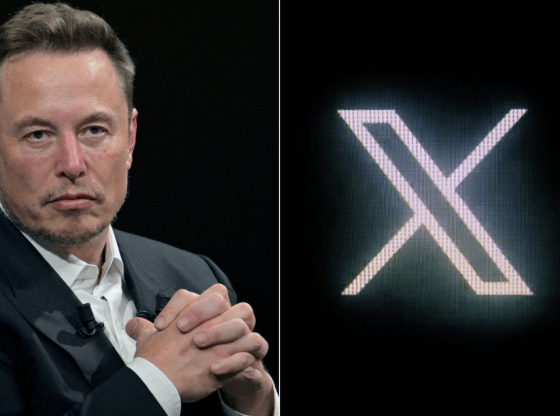
Following the courtroom victory, OpenAI’s counsel dismissed Musk’s arguments as “stories, not facts.” Meanwhile, Musk took to his social media platform, X, to heavily criticize the outcome and confirm his plans to escalate the battle to the appellate court:
“Regarding the OpenAI case, the judge & jury never actually ruled on the merits of the case, just on a calendar technicality. There is no question to anyone following the case in detail that Altman & Brockman did in fact enrich themselves by stealing a charity… I will be filing an appeal with the Ninth Circuit.” — Elon Musk via X
While Musk’s team plans to prolong the legal battle through the appeals process, legal analysts note that overturning a jury’s factual finding regarding statutes of limitations represents a steep, uphill battle.