
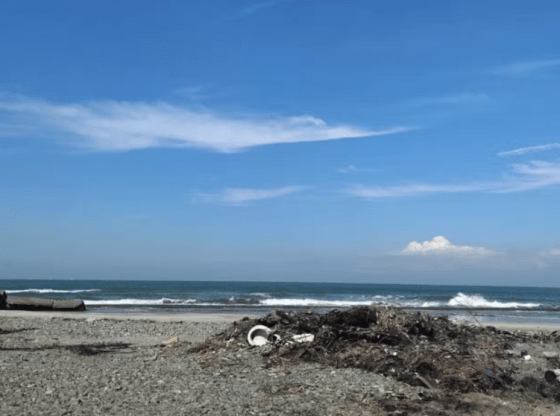


LABRADOR, PANGASINAN — The tranquil rhythms of this coastal town—long defined by small-scale fishing, rice farming, and family-owned beach resorts—have been disrupted by a proposal to build a P225-billion nuclear power plant. The project, championed as a solution to the Philippines’ expensive and unreliable electricity, has transformed Labrador into a focal point for a national debate on energy security versus environmental safety.
The Proposal Pangasinan Second District Rep. Mark Cojuangco, a long-time nuclear energy advocate, is pushing for the construction of a 1,000-megawatt facility on a 120-hectare site in Labrador.
- Why Labrador?: Cojuangco cites the town’s geography as ideal. The mountains allow the plant to be elevated 15 meters above sea level for tsunami protection, while the sea provides the necessary cooling water.
- Economic Promise: Proponents argue the plant would attract investors, create jobs, and provide near-free electricity for the town and lower rates nationwide.
- Small Modular Reactors (SMRs): The plan envisions four SMR units, each occupying roughly 40 hectares. The Department of Energy has listed Labrador as one of several potential sites, alongside areas in Bataan and Palawan.
Rising Opposition What began as a quiet resistance has grown into a unified movement as residents and environmentalists warn of the project’s existential risks.
- Livelihood at Risk: Farmer-leader Hipolito Mislang, 93, warns that a nuclear accident or the environmental impact of the plant could collapse the town’s agriculture and fishing sectors.
- Exclusion Zone Concerns: Local schoolteacher Jericho Lontoc, 23, points out that the standard 16-kilometer danger zone would effectively make the entire town of Labrador uninhabitable.
- Geological Hazards: Critics highlight the town’s proximity to the East Zambales fault line and the Philippines’ overall vulnerability to supertyphoons and earthquakes.
The Church’s Stance The debate reached a fever pitch in December 2025 when Archbishop Socrates Villegas and 33 other Catholic bishops issued a pastoral letter strongly opposing the project.
- Moral Responsibility: The letter cites the 2011 Fukushima disaster and the lack of permanent solutions for radioactive waste disposal as primary reasons for their opposition.
- Renewable Alternative: Church leaders are calling for the “strict and urgent” implementation of the Renewable Energy Law instead, advocating for solar, wind, and other clean energy sources.
Local Leadership and Public Sentiment While some town and barangay officials support the project for its economic potential, provincial leaders like Gov. Ramon Guico III have expressed caution, stressing that safety studies must be paramount. In a recent show of defiance, about 500 residents joined a motorcade and signed a manifesto opposing the plant on the grounds of St. Isidore the Farmer Parish.
As the first of a three-part special report on the issue, the Inquirer highlights a town grappling with a difficult choice: the promise of industrial progress and cheaper power, or the preservation of a way of life that has sustained the community for generations.