
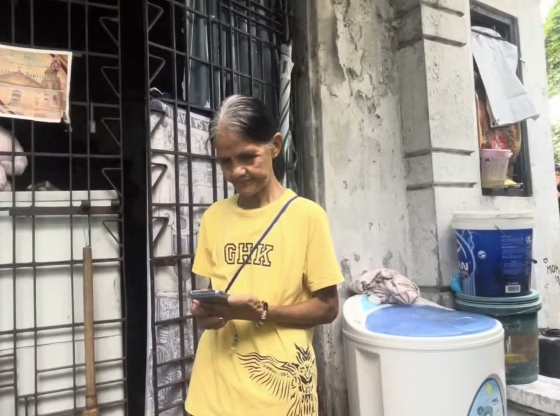


In one of Metro Manila’s oldest burial grounds, the Manila North Cemetery, a unique and often overlooked reality plays out: people living in and among the tombs. What started as a practical arrangement—cemetery caretakers staying near the mausoleums they maintain—has evolved into full-blown households built atop crypts.
One resident, 51-year-old Priscilla Buan, shares her life in this space: she and her family sleep on two crypts inside a mausoleum, convert the remaining area into a modest living room furnished with a sofa and cabinet, and run a small snack stall through the tomb’s grilled window. “Even if I wanted to, we don’t have money to buy a house,” she said.
Buan’s story is part of a broader pattern. The original caretakers—tasked with cleaning tombs and watching over the mausoleums—are now seeing their children and grandchildren also choosing to live in the same space. Vicente Eliver of the Kapatiran-Kaunlaran Foundation notes a “concerning increase” in cemetery dwellers beyond the original caretakers.
Life here is complicated. Residents rely on informal agreements: many say they have permission from tomb owners to occupy a mausoleum space in exchange for upkeep. They tap into existing power lines for electricity and pay a few pesos per gallon for nearby well water. Still, the arrangement is unofficial; the cemetery director emphasizes: “This is a cemetery, it’s for the dead and not for the living.”
For families like Buan’s, living among the tombs carries both practical challenges and emotional weight. Children endure bullying because of their address. Yet, few see any realistic alternative: “All of us here dream of having a house outside … but … it’s hard, very hard.”