

COTABATO CITY, Philippines — Panic and structural damage gripped key urban hubs in southern Mindanao as a powerful undersea earthquake caught the region off guard. A massive magnitude 7.0 earthquake sent students, faculty, and office workers fleeing into open spaces just as schools were opening for the first day of classes.
The severe shaking disrupted critical utility grids, triggered rapid emergency evacuations, and resulted in localized structural failures.
The earthquake struck at exactly 7:37 AM, with state seismologists locating the center of the movement just off the coast of South Cotabato:
                        [ THE SOUTHERN MINDANAO RUPTURE CARD ]
                                           │
         ┌─────────────────────────────────┴─────────────────────────────────┐
         ▼                                                                   ▼
   [ SPECIFIC RUPTURE METRICS ]                                        [ THE INTENSITY ZONE ]
 • **The Epicenter:** Tracked approximately **13 kilometers south**    • **The Ground Zero:** General Santos City bore the brunt of the
   of General Santos City.                                             • shaking, logging highly destructive intensity levels.
 • **The Shallow Depth:** Recorded by Phivolcs as a highly shallow     • **The Shockwave:** Strong shaking was felt over hundreds of
   crustal movement, amplifying the power of surface waves.            • kilometers, shaking buildings across multiple provinces.
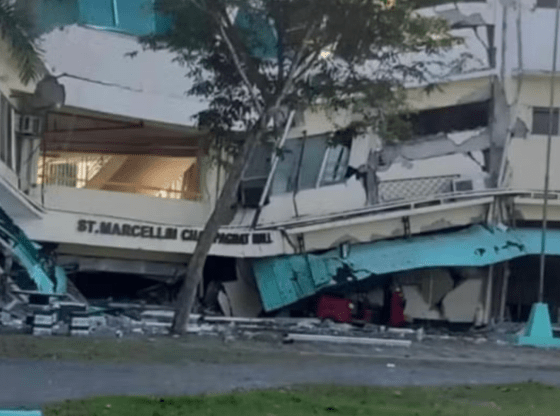
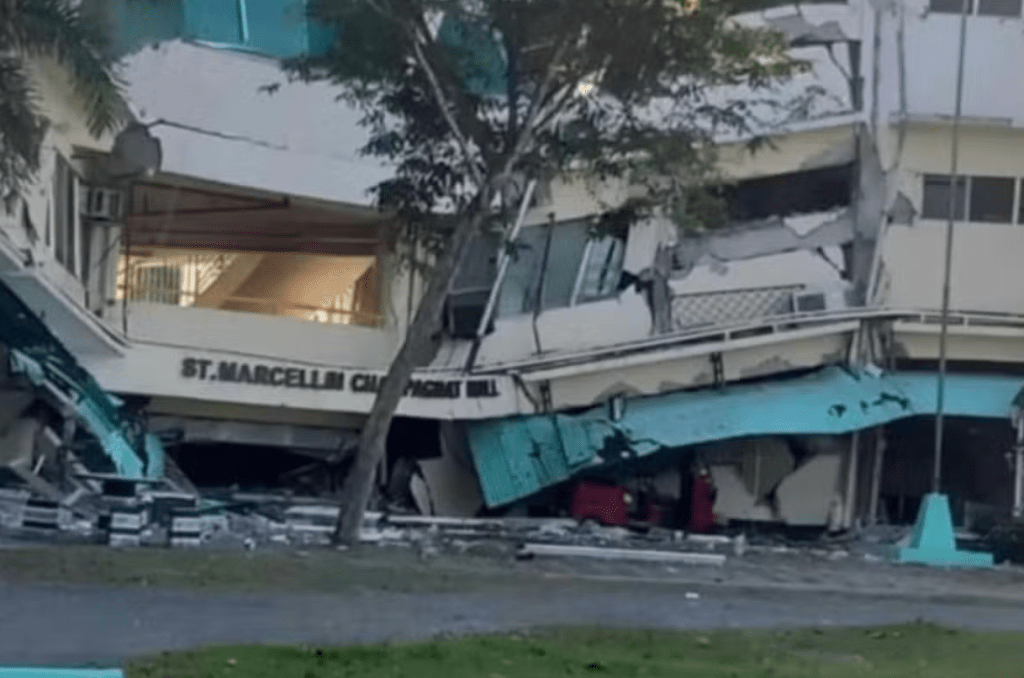
The rapid shaking caused immediate structural damage in General Santos City. At Notre Dame of Dadiangas University (NDDU), a major campus building—the St. Marcellin Champagnat Hall—suffered a partial structural collapse, dropping concrete beams and debris onto the grounds below.
[ THE SOCALSKSARGEN EMERGENCY REPORT ] │ ▼[ School Ground Panic ] ──► The quake struck during early morning campus arrivals on the first day of classes, forcing thousands of students out of classrooms into open fields. │ ▼[ Total Utility Failures ]──► Koronadal City—the administrative center of region 12—reported immediate blackouts alongside widespread disruptions to internet, phone, and water services. │ ▼[ Executive Suspension ] ──► Local government units quickly suspended classes and public office work to allow structural engineers to check bridges, flyovers, and government offices.
As local disaster teams set up emergency response outposts across affected business districts, regional hospitals began checking building safety while continuing to treat patients.
| Emergency Sector | Active Operational Directive | Primary Focus |
| Phivolcs Tracking Desk | Processing ongoing secondary aftershocks and coordinating with maritime agencies regarding active coastal tsunami warnings. | Advising local governments on potential hazard risks before clearing residents to return to concrete buildings. |
| MDRRMC Engineer Teams | Deploying rescue units and rapid structural assessment teams to malls, schools, and major road corridors. | Checking building foundations for structural cracks and marking unsafe properties with danger zones. |
| Utility Cooperative Crews | Assessing high-voltage transmission lines, broken water mains, and localized substations for damage. | Repairing damaged lines to safely bring power and water networks back online across Koronadal and GenSan. |
“The first day of classes was completely disrupted as the floor began to pitch violently. We standardly drill for earthquakes, but when the big one hits, the real-world panic in crowded hallways makes immediate building clearings a massive challenge,” reported a local emergency volunteer, adding that damage assessment crews will continue checking city blocks through the evening.
Local security forces and civilian rescue groups are prioritizing safety checks at coastal ports and public marketplaces to clear fallen masonry and debris. Because this region sits near several highly active fault systems, local disaster councils have maintained high alert postures over the last several years. Emergency managers are urging residents to remain outside concrete structures during active aftershock sequences, as secondary tremors can cause further damage to already weakened walls. With regional offices closed and utility crews working to fix broken communication lines, the immediate priority across Mindanao remains managing public safety and completing strict building inspections.