
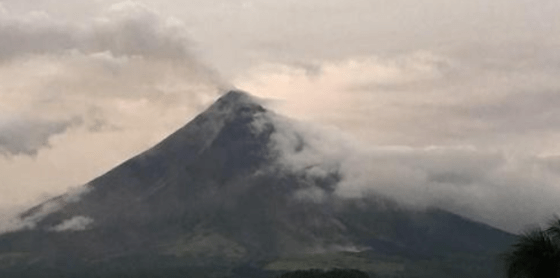

The Philippine Institute of Volcanology and Seismology (PHIVOLCS) has announced a downgrade in the alert status of Mayon Volcano, shifting from Alert Level 2, indicating a moderate level of unrest, to Alert Level 1, symbolizing a low level of unrest. This decision reflects a significant reduction in volcanic activity, suggesting that the likelihood of an eruption in the near future has decreased.
PHIVOLCS based its decision on a consistent decrease in monitored volcanic activities. Notably, the Mayon Volcano Network (MVN) recorded a drop in the daily average of volcanic earthquakes to 2-3 since early January 2024. These quakes, largely due to rock fracturing processes within the volcano, along with a decline in rockfall events, suggest a slowdown in the growth of Mayon’s summit dome.
Despite long-term ground deformation data indicating the volcano’s overall inflation, recent data show deflation on the northern middle slopes and continued inflation on the southern and upper slopes. Microgravity measurements also revealed density variations within the volcano, attributed to the crystallization of magma beneath the surface.
Sulfur Dioxide (SO2) emissions remain above the background level, consistent with ongoing degassing of the magma. Fluctuations in SO2 emissions were observed, with rates ranging from a high of 2,394 tonnes/day in January to a low of 420 tonnes/day in March 2024, averaging 1,148 tonnes/day since the start of the year.
The summit crater of Mayon has only produced weak to moderate degassing plumes, with no lava flows observed in the Mi-isi, Bonga, and Basud Gullies. The absence of significant summit activity, minimal rockfall events, and stagnant lava flows are in line with the lack of fresh magma supply to the shallow parts of the volcano.
While the reduction to Alert Level 1 signals a diminished threat, PHIVOLCS cautions the public against complacency. The Permanent Danger Zone (PDZ) within a six-kilometer radius of the summit remains off-limits due to the risks of rockfalls, avalanches, and potential steam-driven or phreatic eruptions.
Residents in nearby communities are advised to stay vigilant, especially during ash falls and heavy rainfall, which could trigger lahars and sediment-laden streamflows. Civil aviation authorities are also warned to keep aircraft away from the volcano’s summit to avoid ash hazards. People living in valleys and along active river channels should remain alert to the dangers of lahars in case of prolonged heavy rain.