

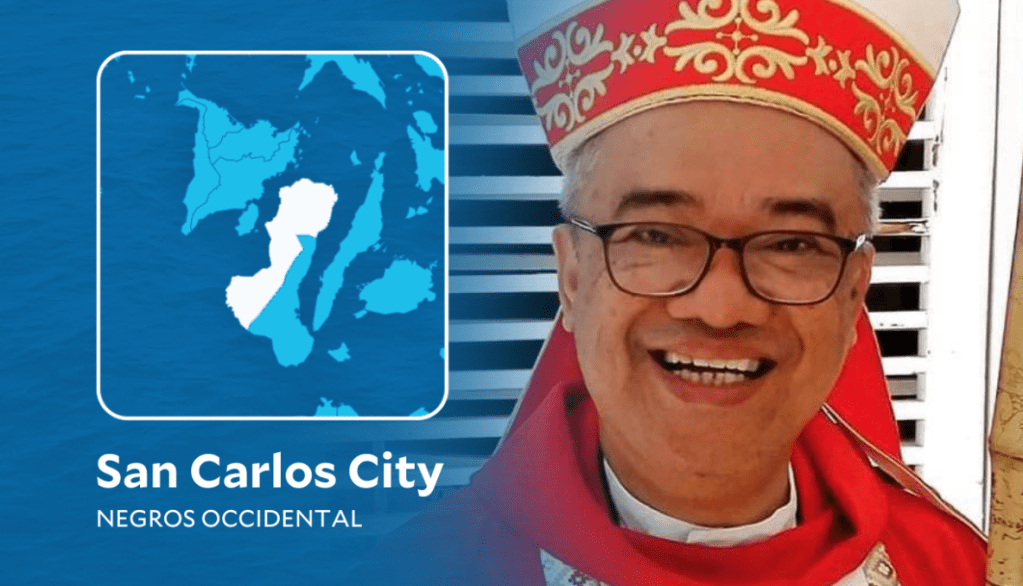
BACOLOD CITY – Amid the escalating flood control corruption scandal that has gripped the nation, Bishop Gerry Alminaza of the Diocese of San Carlos City in Negros Occidental has issued a resounding call for the immediate passage of a genuine anti-political dynasty law, decrying the stranglehold of entrenched clans as a primary enabler of graft and ecological neglect. In a strongly worded statement released on Sunday, December 7, 2025, Alminaza warned that without decisive reforms, the country’s “moral reckoning” will remain incomplete, urging Filipinos to unite in advocacy for accountability and non-repetition to safeguard the marginalized from the shadows of power.
Alminaza, who also serves as president of Caritas Philippines—the social action arm of the Catholic Bishops’ Conference of the Philippines—framed the plea against the backdrop of ongoing investigations into anomalous flood control projects, where billions in public funds have allegedly vanished into ghost initiatives, leaving communities vulnerable to disasters like the recent Typhoon Uwan. “An Anti-Dynasty Law should be passed without delay,” he declared. “Some clans have dominated politics for decades. Yet, even newer politicians in national leadership seem to quickly expand their reach through the election or appointment of their relatives.”
Citing a recent report by the Philippine Center for Investigative Journalism (PCIJ), Alminaza highlighted the alarming persistence of political dynasties despite constitutional prohibitions. At least 18 “obese” clans—those with five or more members in public office—emerged victorious in the 2025 elections, expanding from “thin” to “fat” and beyond. “Many of the regions where political dynasties rule remain poor [and] social services in these areas often do not reach the marginalized,” he lamented, linking this entrenchment to systemic corruption that exacerbates ecological degradation.
The bishop’s message, rooted in Pope Francis’ encyclical Laudato Si’, calls for an “integral ecology” approach that intertwines anti-corruption efforts with environmental stewardship. “But now, we must address the underlying, root causes that have been uncovered: Namely, ecological degradation and corruption in governance,” Alminaza stated. He cautioned that some officials might feign thorough reforms to quell public outrage, urging vigilance: “We must stand together and continue our advocacy until measures for non-repetition and accountability are fully achieved.”
Alminaza drew from the Catholic Church’s hands-on response to recent calamities, where Caritas Philippines has provided rescue and relief to typhoon-hit communities. “Anti-corruption, integral ecology advocacy and social action must remain in focus,” he emphasized, positioning the anti-dynasty law as a cornerstone for true progress.
The call resonates deeply in Negros Occidental, a sugar-rich province long shadowed by political clans like the Lacsons and Marañons, where poverty persists amid vast estates. Advocacy groups echoed the bishop’s urgency, with the Negros Movement for Social Justice demanding congressional action: “Dynasties breed corruption—end them to end the cycle.”
As the 2026 midterms loom and the flood probe’s tentacles reach deeper—implicating lawmakers in kickbacks and phantom projects—Alminaza’s voice cuts through the noise: In a nation confronting its moral compass, the anti-dynasty law isn’t optional—it’s overdue, a beacon to break the chains of inherited impunity and illuminate a future where power serves the people, not the pedigrees.
Key Calls from Bishop Alminaza:
- Immediate Passage: Enact a “genuine” anti-dynasty law to dismantle clan dominance.
- Public Advocacy: Unite for accountability and non-repetition measures.
- Holistic Focus: Integrate anti-corruption with ecology and social action.