

Surprising Discovery
NASA’s Perseverance rover, during a strategic detour to avoid a boulder-strewn path, stumbled upon an intriguing field of stones, unlike any previously observed on Mars.
On its fourth mission since landing three years ago, Perseverance explored Neretva Vallis, a dried-up river channel leading into the Jezero Crater. The rover, navigating through more accessible terrain, encountered a hill with boulders that, according to NASA, are “of a type never observed before on Mars.”
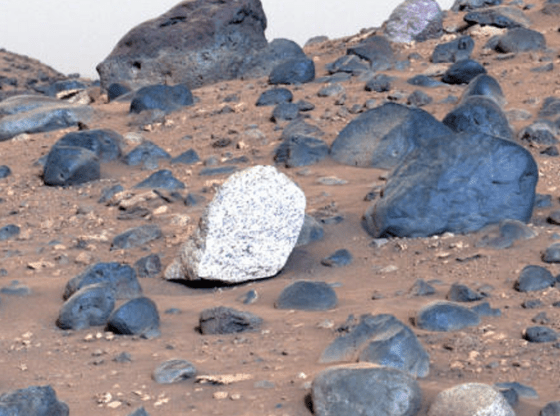
Among them, a pale boulder measuring about 18 inches wide and 14 inches tall stood out prominently against its darker surroundings. This distinctive rock, nicknamed “Atoko Point,” has sparked curiosity about Mars’ geological history.
Geological Significance
Mars, often referred to as the Red Planet, rarely shows geological diversity. NASA’s closer inspection revealed that Atoko Point contains minerals such as pyroxene and feldspar, hinting at an underground magma origin. However, its surface presence remains a mystery. Scientists speculate it might have been transported by water flow.
Katie Stack Morgan, deputy project scientist of the Mars 2020 mission, suggested that Atoko Point might be an anorthosite—a rock type previously unseen on Mars but common on Earth and the Moon. This discovery hints that Mars’ geological history may be more similar to Earth’s than previously thought.
“Seeing a rock like Atoko Point is a hint that we do have anorthosites on Mars,” Stack Morgan explained. “If we find more like it, we can learn about the earliest crust formation on Mars.”
The existence of Atoko Point suggests more such rocks are waiting to be discovered. As Perseverance continues its journey, scientists will be on the lookout for clues about the boulder’s origins.