


The Philippine Embassy in Washington, D.C. has formally reached out to U.S. authorities following multiple reports that Filipino seafarers were denied entry at American ports in recent months.
In a statement issued on October 22, 2025, the embassy confirmed it contacted the United States Department of State and the United States Department of Homeland Security (DHS) to seek explanations about the entry denials. The two U.S. agencies reportedly explained that the seafarers’ cases were handled in accordance with existing U.S. laws, regulations and policies.
The embassy emphasised that it would continue engaging with the U.S. government to ensure that consular notification requirements — such as the right of Philippine authorities to be informed when a Filipino is detained or deported abroad — are upheld.
Significantly, the embassy’s statement did not specify how many seafarers were affected or identify the particular U.S. ports where the denials occurred. However, a Senate estimate revealed that as of mid-2025, at least 93 Filipino seafarers had been deported from the U.S. — with 87 cases reported since early in the year.
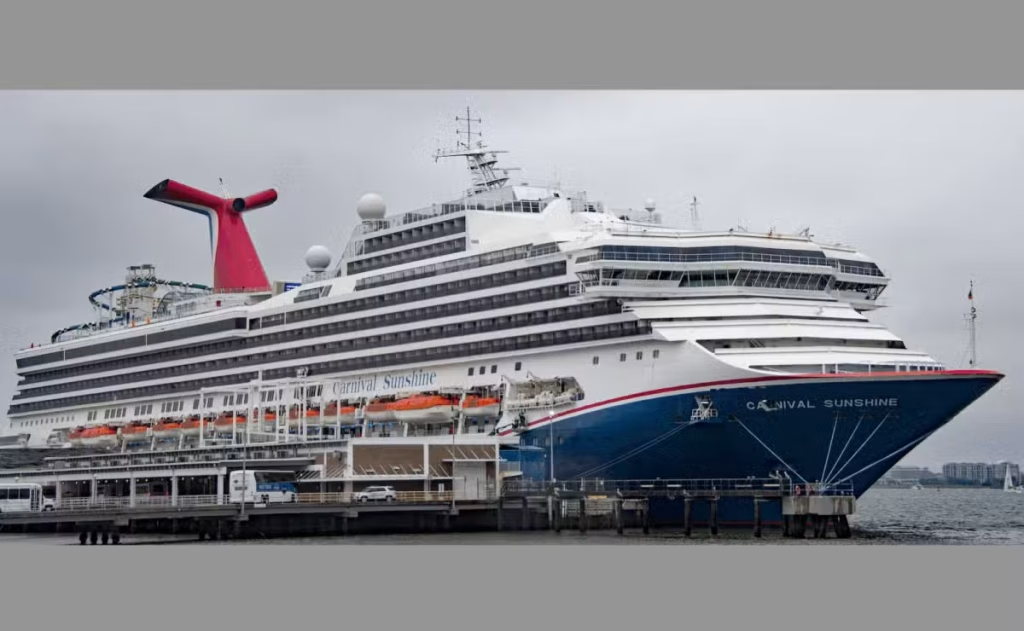
One high-profile incident involved about 21 Filipino crew members aboard the cruise ship Carnival Sunshine. They were reportedly inspected by U.S. agents at a U.S. port, had their mobile phones checked for child-pornography content, yet were denied entry and deported despite no formal charges being filed.
The embassy also noted that for employment-related assistance (such as finding new postings), the matter falls under the authority of the Department of Migrant Workers (DMW) in the Philippines, which has indicated its readiness to help affected seafarers.
This situation underscores concerns about the treatment of Filipino maritime workers at foreign ports — especially given that the Philippines is a major global supplier of seafarers. The embassy’s outreach may aim not only to secure justice for the affected individuals, but also to protect the rights and reputations of Filipino maritime labour abroad.