

In a surprising turn of events, Ayungin Shoal, once a flashpoint between Chinese and Philippine forces, has experienced an unusual calm following a recent agreement between the two nations. However, this relative tranquility has not extended to other parts of the West Philippine Sea, where tensions remain palpable.
On a recent maritime patrol conducted by the Bureau of Fisheries and Aquatic Resources (BFAR) and the Philippine Coast Guard (PCG) on August 22, the BRP Sierra Madre, a Philippine naval post stationed at Ayungin Shoal, was observed from the air. The once-bustling area now shows only a few Chinese maritime militia vessels keeping a distant watch, while a Chinese Coast Guard ship quietly navigates the waters.
The current calm follows a July 27 agreement that allowed the Philippines to successfully complete a rotation and resupply mission to the Sierra Madre. However, the details of this agreement have not been made public.
Despite this newfound peace at Ayungin Shoal, the situation is far from resolved elsewhere in the West Philippine Sea. Just east of Ayungin Shoal, in Escoda or Sabina Shoal, the maritime patrol revealed an increasing presence of Chinese maritime militia vessels, encircling the BRP Teresa Magbunua, which has been stationed there for four months amid reports of Chinese reclamation activities.
The Chinese have accused the Philippines of using the BRP Teresa Magbunua for forward-base development, similar to the semi-grounding of the BRP Sierra Madre at Ayungin Shoal. The Philippine Coast Guard, however, denies these allegations, stating that their primary objective is to protect the rights of Filipino fishermen.
The tension escalated on August 19 when two Philippine Coast Guard vessels were damaged during a confrontation with the Chinese Coast Guard near Escoda Shoal, underscoring that the West Philippine Sea remains a highly contested region.
National Maritime Council spokesperson Vice-Admiral Alexander Lopez expressed concern over the aggressive behavior of the Chinese Coast Guard, noting that their actions are in stark contrast to their supposed role in ensuring safety at sea. Lopez emphasized that while the Ayungin agreement has proven useful, there is a need to consider extending its scope to other areas in the West Philippine Sea.
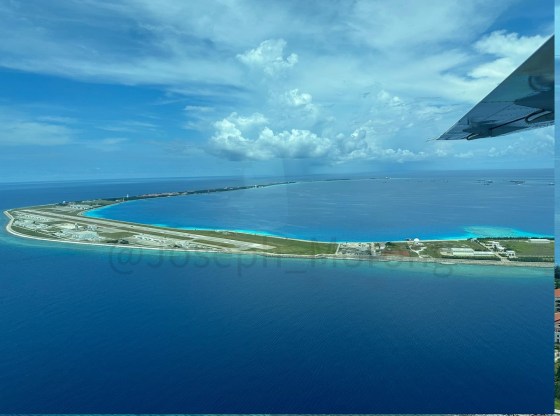
The situation at Panganiban Reef (Mischief Reef) serves as a stark reminder of China’s intentions in the region. Once declared as a fishermen’s shelter in 1995, the reef is now a heavily fortified artificial island, equipped with military facilities and numerous Chinese vessels ready to assert control over the area.
During the BFAR patrol, the Chinese also fired flares at the patrol plane as it flew near Zamora Reef (Subi Reef), sending a clear message of their readiness to defend their claimed territories.
As the Philippines navigates its future in the West Philippine Sea, the outcomes of the Ayungin agreement remain uncertain, but the lessons of the past continue to loom large.