


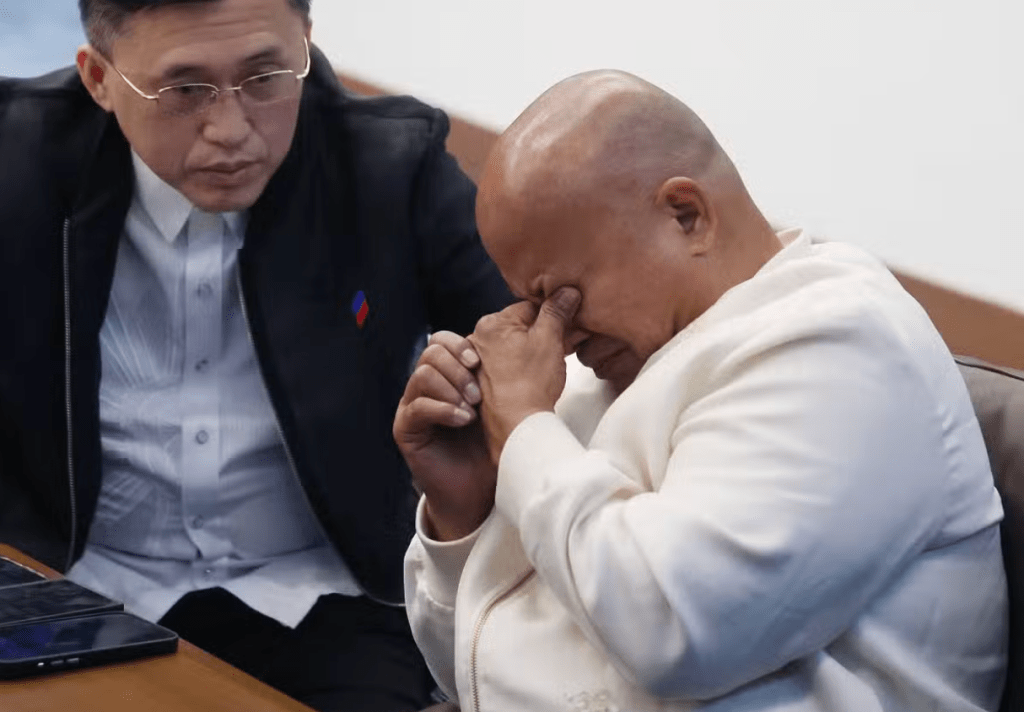
MANILA, Philippines — Stripping away a critical layer of legal armor from an embattled lawmaker, the nation’s highest tribunal has refused to block international investigators.The Supreme Court (SC) voted overwhelmingly to deny the plea of Senator Ronald “Bato” dela Rosa for a temporary restraining order (TRO) to halt the implementation of a confidential arrest warrant issued by the International Criminal Court (ICC).
The decisive judicial blow leaves the chief enforcer of the previous administration’s anti-narcotics campaign directly exposed to potential detention or transfer by local and foreign law enforcers.
The high court convened in a special en banc session to address the senator’s frantic petition. The justices voted 9-5-1 to reject the immediate request for a TRO or a Status Quo Ante Order (SQAO):
- Interim Denial Only: SC spokesperson Camille Ting clarified that the ruling strictly applies to the prayers for interim relief (the TRO). It does not mean the entire petition has been thrown out; the substantive, deeper constitutional issues raised by dela Rosa regarding sovereignty and domestic jurisdiction remain pending for a final ruling.
- The Blueprint Release: The full resolution, along with the individual dissenting and concurring opinions of the justices, is officially scheduled to be uploaded to the Supreme Court website on May 25, 2026.
[Nov 2025: ICC Warrant Secretly Issued] ──► [May 11, 2026: Trillanes Leaks Warrant Info] │ ▼[SC En Banc Votes 9-5-1 to Reject TRO] ◄── [OSG Urges SC to Deny Technical Evasion]
The legal firestorm erupted after the ICC officially confirmed that a warrant for dela Rosa’s arrest was quietly signed back on November 6, 2025, in connection with its sweeping investigation into alleged crimes against humanity during the Rodrigo Duterte administration’s deadly “Tokhang” drug war.
Dela Rosa—who served as the director of the Davao City Police Office and later as chief of the Philippine National Police (PNP)—filed his urgent manifestation after former Senator Antonio Trillanes IV publicly presented what he claimed to be a copy of the confidential international warrant. In his filing, dela Rosa asked the court to bar the National Bureau of Investigation (NBI), the PNP, and foreign conduits from arresting or transferring him without prior explicit authorization from a local judge.
The Supreme Court’s refusal to issue a protective shield closely mirrors a fiercely worded legal comment submitted over the weekend by the Office of the Solicitor General (OSG). The state’s primary law firm urged the high tribunal to junk dela Rosa’s plea, explicitly arguing against using local legal mechanisms to shield influential politicians from global human rights accountability:
                    [ OFFICE OF THE SOLICITOR GENERAL POSITION ]
                                         │
        ┌────────────────────────────────┴────────────────────────────────┐
        ▼                                                                 ▼
  [ NO EXCUSE FOR EVASION ]                                       [ THE FUGITIVE PRINCIPLE ]
  • The law is not a weapon to be wielded exclusively            • The OSG noted that dela Rosa's current actions
    by those in power to evade ongoing prosecution.                 represent a "deliberate intent to evade."
  • Emphasized justice for the "voiceless dead" whose            • Argued that fugitives lose standing in court
    cries never reached domestic courtrooms.                        and waive their rights to seek discretionary relief.
  • Marcos administration maintains an active stand-down          • Rejects any technical reasoning that disguises
    order on active raids but respects judicial independence.       the absence of basic human rights justice.
The political and legal aftershocks of the high court’s decision are already reverberating across the capital. Following a chaotic standoff last week where heavily armed NBI operatives surrounded the legislative complex—triggering the Senate Sergeant-at-Arms to discharge warning shots and lock down the building—dela Rosa’s current whereabouts remain completely unknown.
While the Department of Justice (DOJ) has reiterated that local law enforcement agencies are currently “standing down” on serving the ICC warrant out of courtesy until the Philippine courts issue a final, binding decision on the main case, the Supreme Court’s refusal to grant a TRO means the senator remains entirely without an explicit judicial safety net.