
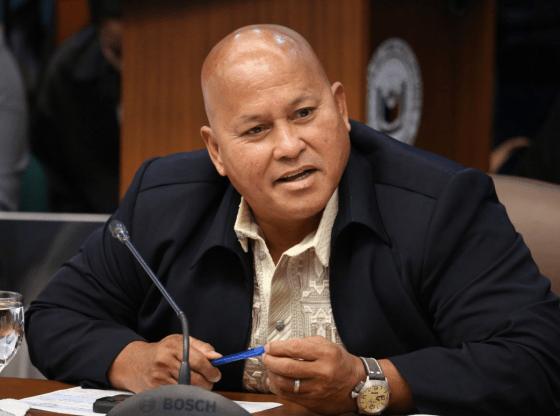


MANILA, Philippines — Handing down a major constitutional ruling on the boundaries of state protection and international accountability, the high tribunal has cleared the runway for local law enforcement to act. According to an Inquirer News report published late Monday night, May 25, 2026, the Supreme Court (SC) released the official copy of its resolution detailing why it denied Senator Ronald “Bato” dela Rosa’s urgent request for a Temporary Restraining Order (TRO) to block his arrest under an International Criminal Court (ICC) warrant.
The high court clarified that its 9–5–1 vote strictly addresses the senator’s prayer for immediate interim relief, leaving the deeper, main constitutional issues raised in his petition to be resolved at a later date.
Dela Rosa had filed a petition arguing that the enforcement of the ICC warrant—unsealed earlier this month—directly threatened his core constitutional rights to liberty, due process, and his capacity to perform legislative functions. The Supreme Court rejected these arguments completely:
[ICC Arrest Warrant Unsealed] ──► Senator Files Urgent Petition Seeking Constitutional Immunity │ ▼ (The Supreme Court Examination)[Fails Injunction Benchmarks] ◄── High Court Asserts No Existential Threat Has Materialized │ ▼ [Invasion of Purported Rights Ruled "More Imagined Than Real"]
To secure a TRO under Philippine jurisprudence, an applicant must demonstrate a right in esse—a clear, actual, and unmistakable legal right granted explicitly by law. Chief Justice Alexander Gesmundo, leading the 9-justice majority block, ruled that Dela Rosa failed to meet this burden. The court noted that the rights the senator is claiming are heavily disputed and entirely contingent on the final judgment of the main case.
The SC highlighted that Dela Rosa’s fear of an imminent, lawless arrest lacked factual backing, taking judicial notice of institutional safeguards and statements from the executive branch:
                          [ HIGH COURT RESOLUTION BENCHMARKS ]
                                             │
         ┌───────────────────────────────────┴───────────────────────────────────┐
         ▼                                                                       ▼
   [ REVENUE & PROTECTIVE CUSTODY ]                                        [ EXECUTIVE CLARITY ]
   • **Active Senate Immunity:** The chamber had already granted the        • **Marcos Statement Noted:** The justices factored in a
     senator protective custody on its premises, preventing local             May 13, 2026, Facebook Live broadcast by President
     agents from executing the warrant during active sessions.                Ferdinand Marcos Jr.
   • **No Immediate Harm:** Because legislative protection was active,      • **Zero Directives Issued:** The Chief Executive explicitly
     the claim of an active "invasion of liberty" was dismantled.             stated he had issued no orders to arbitrarily arrest the senator.
While the core resolution focused on procedural rules, concurring opinions written by the magistrates carried heavy language regarding public accountability.
| Magistrate Viewpoints | Distinct Concurring Legal Observations | Equity Benchmarks |
| Associate Justice Alfredo Benjamin Caguioa | Asserted that the high court must never serve as a sanctuary for public officers fleeing accountability for mass human rights violations. | Argued that using due process to dodge international courts is a profound insult to drug war victims. |
| Associate Justice Filomena Singh | Pointed out that Dela Rosa went into hiding, surfaced only for political convenience, and has since gone into flight again. | Reminded the petitioner that anyone seeking equitable relief from the judiciary must come with “clean hands.” |
The release of the resolution has triggered swift developments across the capital’s defense architecture. Following directives from the Department of Justice (DOJ), National Bureau of Investigation (NBI) Director Melvin Matibag confirmed that a formal coordination letter has been transmitted to the Philippine National Police (PNP) to initiate tracker operations.
Because Dela Rosa slipped past security barriers and left the Senate building before dawn on May 14, authorities have officially categorized him as at large—warning that under existing firearms protocols, the former PNP chief is legally presumed to be “armed and dangerous.”
Meanwhile, family members are launching desperate public appeals to contain the fallout. On Monday, the senator’s wife, Nancy dela Rosa, posted an emotional message on Facebook pleading with local judges to shield her husband from being extradited to The Hague, arguing that surrendering a Filipino citizen to an international body is an open admission that the domestic judicial system is weak.
Despite the family’s appeals, the Department of Justice maintained that law enforcement will move immediately to implement the warrant, setting up an intense political standoff as state agents look to track down the primary architect of the Duterte administration’s anti-narcotics campaign.