


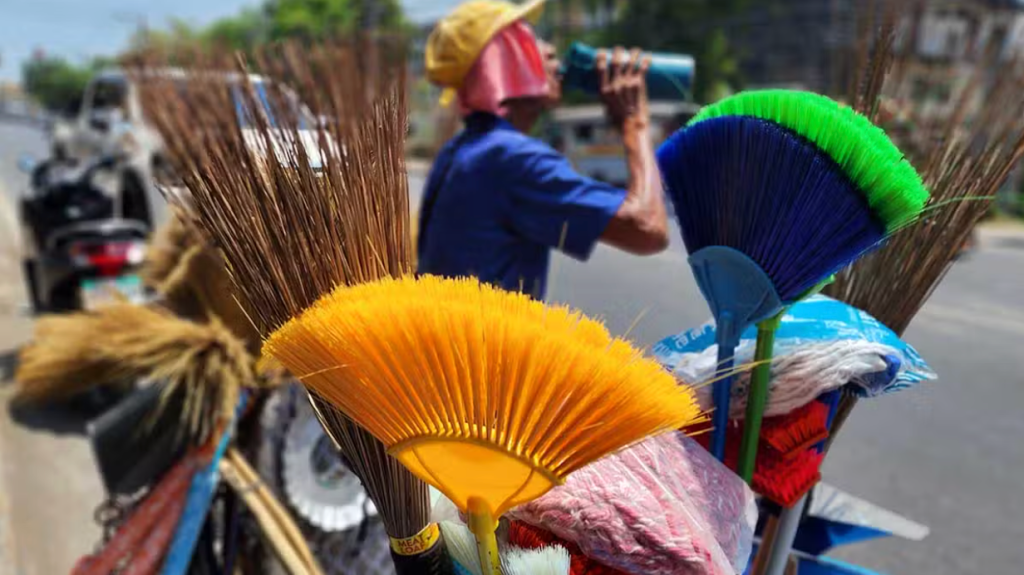
MANILA, Philippines — Major regions across Luzon, the Visayas, and Mindanao are currently grappling with a dangerous combination of extreme temperatures, water shortages, and forest fires as the country prepares for a potential “Super” El Niño. On Monday, April 27, 2026, the state weather bureau PAGASA recorded heat indices reaching the “danger” level in over 10 areas, prompting emergency health advisories from local governments.
PAGASA defines the “danger” category as temperatures perceived by the human body between 42°C and 51°C, which can lead to heat cramps, exhaustion, and heat stroke.
- Hottest Spots: Dumangas, Iloilo, recorded the highest heat index at 45°C, followed closely by Sangley Point, Cavite, at 44°C.
- Other High-Risk Areas: Iloilo City, La Carlota (Negros Occidental), and Guiuan (Eastern Samar) all hit 43°C.
- Metro Manila: The capital region experienced an “extreme caution” level of 40°C to 41°C.
The intensifying dry spell is causing significant disruptions to utilities and public safety:
- Water Shortages: In Mindanao, Butuan City is facing a critical water crisis as the Taguibo watershed has dropped to record lows. Meanwhile, Baguio City has begun early rationing and contingency planning in anticipation of a prolonged drought.
- Wildfires: Upland barangays in Malaybalay City, Bukidnon, are struggling to contain forest and grass fires sparked by the intense heat and tinder-dry conditions.
- Power Grid Strain: In Calbayog, an 18-hour power outage exacerbated the situation, leaving residents without cooling systems during a 43°C peak heat window.
Malacañang issued a statement on Monday assuring the public that the administration is ready to mitigate the impact of the phenomenon.
- Irrigation Priority: The National Irrigation Administration (NIA) has been tasked with identifying vulnerable farming areas to prioritize water distribution.
- Agricultural Aid: The Department of Agriculture (DA) is rolling out concrete measures to support farmers whose crops are at risk of wilting.
- Public Health: Health officials urge the public to limit outdoor exposure between 10:00 AM and 4:00 PM, stay hydrated, and wear light, breathable clothing.
Meteorologists are warning that the current warming of the Pacific Ocean could develop into a “Super” El Niño, a rare and extreme version of the weather pattern. Unlike regular El Niño events, this variant can cause significantly longer periods of drought and much higher average temperatures, potentially lasting well into the following year and threatening the country’s food and energy security.