
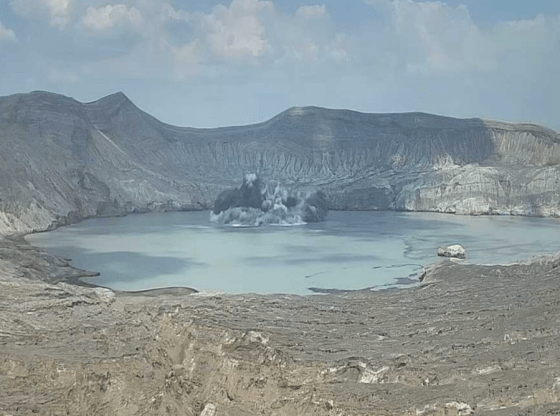

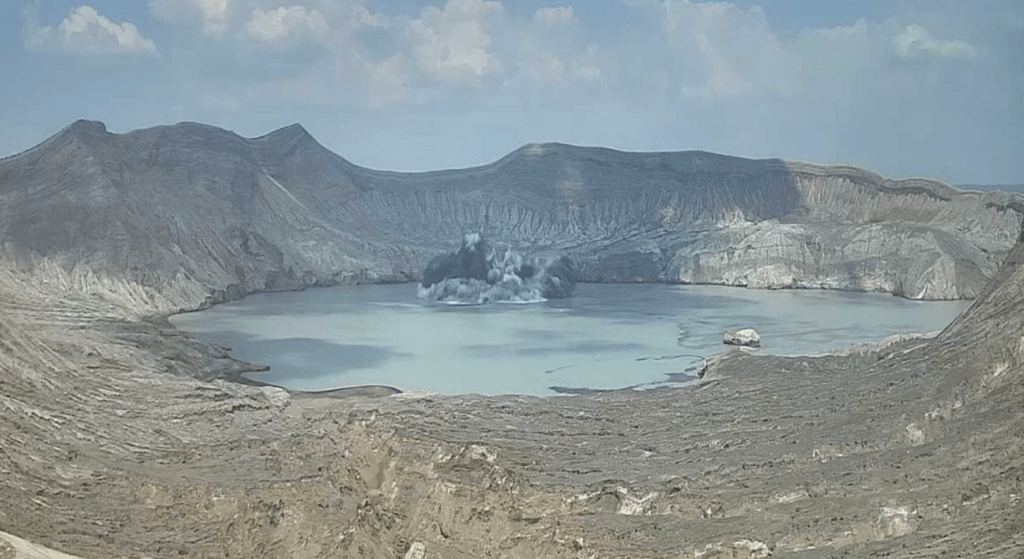
LUCENA CITY, Philippines — The Philippine Institute of Volcanology and Seismology (PHIVOLCS) reported a sharp spike in sulfur dioxide (SO2) emissions from Taal Volcano on Friday, May 8, 2026, as the volcano continues to exhibit signs of low-level unrest.
According to the latest 24-hour monitoring report, Taal released 653 metric tons of SO2 on Thursday, May 7—more than double the 308 metric tons recorded just the day before.
Current Volcanic Activity (As of May 8, 2026)
While the emissions remain classified as “weak” compared to historical highs, the sudden increase has been accompanied by a notable rise in local seismicity.
- Gas Emissions: 653 tonnes/day (up from 308 tonnes/day).
- Seismic Events: PHIVOLCS recorded 9 volcanic earthquakes, including one volcanic tremor that lasted two minutes. This follows a broader trend of intensified unrest, with 22 earthquakes logged between May 5 and May 7.
- Plume Activity: Moderate steaming produced plumes reaching up to 600 meters high, drifting southwest and west-southwest.
- Ground Deformation: Monitoring instruments show a “short-term inflation” of the Taal Volcano Island (TVI), suggesting magmatic or gas-related pressure beneath the surface.
Alert Level 1: “Abnormal Condition”
Taal Volcano remains under Alert Level 1. PHIVOLCS clarified that this status indicates the volcano is in an abnormal state and that the threat of sudden eruptive activity has not ceased.
- Phreatic Explosions: Sudden steam-driven or gas-driven blasts.
- Volcanic Gas: Lethal accumulations of SO2 and other gases.
- Minor Ashfall: Potential localized ash deposits in nearby Batangas municipalities.
- Vog (Volcanic Smog): While no “vog” was detected during this 24-hour window, residents are advised to stay vigilant as emissions fluctuate.
The government continues to enforce strict safety protocols for the surrounding communities:
- Permanent Danger Zone (PDZ): Entry into Taal Volcano Island—particularly the Main Crater and the Daang Kastila fissure—remains strictly prohibited.
- Lake Safety: Boating on Taal Lake is allowed but discouraged near the volcano island.
- Aviation Warning: Civil aviation authorities are advised to avoid flying close to the volcano, as sudden ash or steam could pose a hazard to aircraft.
Local government units in Batangas have been urged to monitor the health of their residents, particularly those with respiratory conditions, as SO2 levels can change rapidly depending on wind direction and volcanic output.