
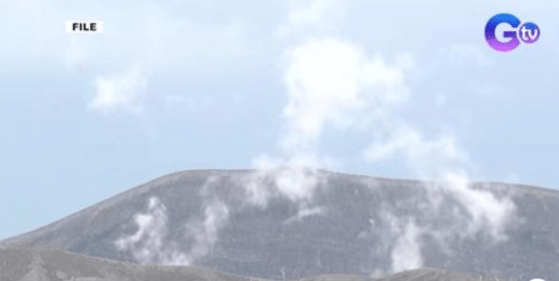

Following the significant emission of over 14,000 tonnes of sulfur dioxide, Taal Volcano is currently not showing signs of an imminent eruption, according to the Philippine Institute of Volcanology and Seismology (PHIVOLCS). In a recent briefing, PHIVOLCS Director Teresito Bacolcol reassured the public by stating that apart from the gas emissions, there are no other present indicators suggesting an eruption in the near future.
Bacolcol emphasized the importance of monitoring various parameters, including seismic activity, which has not shown a noticeable increase with only one volcanic earthquake recorded in the past nine days. This lack of seismic activity is a key factor in determining the volcano’s state and eruption potential.
Despite the low risk of eruption, the continuous release of sulfur dioxide raises concerns about the formation of volcanic smog or vog, which could affect air quality in the surrounding areas. Bacolcol explained that the formation of vog depends on several factors, including wind strength and temperature. Fortunately, strong winds in the Taal area have been preventing the formation of dense vog, and sulfur dioxide is quickly dissipated, especially in rainy or windy conditions.
Residents living near Taal Volcano are advised to remain cautious and wear N95 masks to protect against the potential health effects of sulfur dioxide. Taal Volcano is currently under Alert Level 1, indicating minimal volcanic activity but with the continuous possibility of gas emissions and vog formation.
PHIVOLCS continues to closely monitor Taal Volcano, along with other volcanoes in the country, to provide timely updates and ensure public safety. The situation underscores the importance of vigilance and preparedness in areas prone to volcanic activity.