
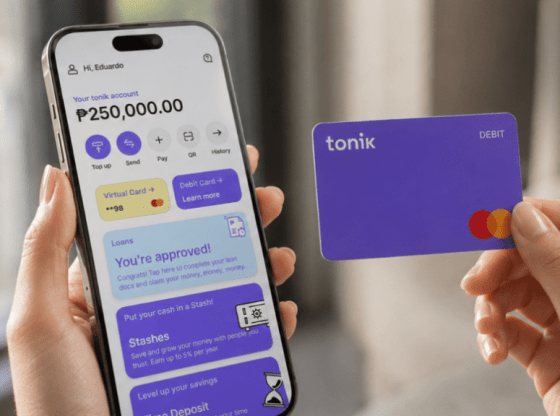


MANILA, Philippines — In a landmark moment for the local fintech industry, Tonik Digital Bank announced on Tuesday, May 12, 2026, that it has officially reached profitability. It is the first standalone (non-ecosystem) digital bank in the Philippines to achieve this milestone, reporting positive consolidated cash net income for the first quarter of 2026.
Unlike other digital banks backed by massive telecommunications or retail conglomerates, Tonik reached breakeven purely through its credit-led business model.
While many neobanks focus on acquiring millions of users through high-interest deposits and payment services, Tonik’s success is attributed to its “credit-first” approach.
- High Yields: Revenue from a loan client is estimated to be 20 times higher than that of a payment-only client.
- Targeted Inclusion: Tonik focuses on the 90% of Filipinos who are unserved by traditional banks but have high demand for consumer credit.
- Operational Efficiency: The bank chose not to chase “vanity metrics” like massive user counts or deposits that could not be immediately deployed into productive loans.
| Metric | Performance |
| Loan Portfolio | $110 Million (Up 2.3x year-on-year) |
| Annualized Revenue Run-Rate | $60 Million+ (99% from lending) |
| Net Interest Margin (NIM) | 51% (Highest in the market) |
| Loan-to-Deposit Ratio | 82% (Highest among PH digital banks) |
| Lending RAROC | 25% |
Founder and CEO Greg Krasnov highlighted three structural decisions that allowed Tonik to outpace competitors in reaching a sustainable bottom line:
- AI-Driven Underwriting: Five years of refining data models have allowed the bank to profitably lend to “thin-file” borrowers—those with little to no formal credit history.
- Portfolio Diversification: Lending is spread across digital personal loans, merchant installment networks (Shop Installment), and employer-channel salary-deduction loans (Tendo).
- Deposit Advantage: Holding a BSP Digital Banking License allows Tonik to secure retail funding at 3% to 6%, providing a massive margin edge over non-bank lenders who often face 15%+ funding costs.
Having reached profitability, the bank no longer requires external subsidies to fuel its growth. Its near-term priorities include:
- Tendo Expansion: Scaling its payroll-enabled financial services platform.
- Merchant Network: Increasing its physical presence in retail stores for “buy now, pay later” services.
- Pre-IPO Readiness: The milestone changes the conversation for future fundraising as the bank eyes a potential public listing in the coming years.
“Profitability in digital banking is a function of what you choose not to do. We chose not to build deposits we couldn’t deploy. We built a credit bank, and let the income statement follow.” — Greg Krasnov, Founder & CEO