


MANILA, Philippines — Yielding to intense public backlash and fierce condemnation from civil society groups over the removal of mature urban canopies during a severe summer heatwave, the government and its corporate partners have temporarily halted a controversial infrastructure cleanup. The Department of Environment and Natural Resources (DENR) announced that tree-cutting activities along Quirino Avenue have been “paused” to allow for a comprehensive review of mitigation measures.
The strategic suspension comes amid mounting protests from local residents, conservation groups, and church leaders who labeled the sudden removal of decades-old trees an act of ecological violence.
The freeze order materialized during the Kapihan sa Manila Bay media forum on Wednesday, May 27, 2026, where environmental officials confirmed that the private developer voluntarily agreed to suspend field clearing operations:
[Late May: Heavy Chainsaw Operations Along Quirino Ave.] ──► Public Backlash & Protests Intensify Over Loss of Canopy │ ▼ (Dialogue & Evaluation)[Caritas PH Condemns 'Direct Assault' on the Vulnerable] ◄── DENR Convenes with San Miguel Infrastructure Teams │ ▼ [May 27: DENR Announces Voluntary Suspension Order to Re-evaluate Safeguards]
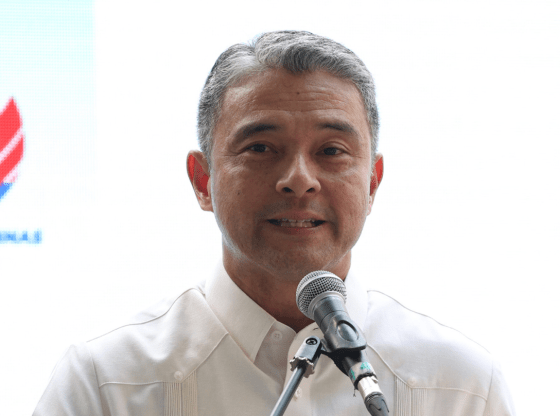
“Right now, the cutting, they voluntarily stopped. And we’re agreeable to this. Let’s pause it for now,” DENR Acting Secretary Juan Miguel Cuna stated. He emphasized that the administrative window will be used to see if the current construction parameters can be adjusted to preserve the remaining standing trees.
The tree-clearing campaign is directly linked to the construction of San Miguel Corporation’s (SMC) Southern Access Link Expressway (SALEX) project—a 40.62-kilometer integrated elevated highway network designed to connect the Metro Manila Skyway Stage 3 directly to Roxas Boulevard.
                            [ COGNITIVE ENVIRONMENTAL BALANCE SHEET ]
                                               │
         ┌─────────────────────────────────────┴─────────────────────────────────────┐
         ▼                                                                           ▼
   [ THE URBAN LOGISTICAL TOLL ]                                              [ TRANSPLANTATION ALTERNATIVES ]
   • **Total Permitted Count:** The original DENR permit authorizes the       • **The Earth-Balling Pivot:** Probers are auditing the feasibility
     removal of up to **617 trees** along the Manila alignment corridor.         of expanding earth-balling—a delicate process of relocating live trees.
   • **Felled Wreckage Matrix:** Crews have already cut down **245 trees**,     • **The Seedling Deficit:** Critics point out that SMC's mandatory
     including a prominent, 50-year-old narra tree that provided              **50,700 seedling replacement plan** cannot replicate the cooling
     substantial shade.                                                        and carbon absorption values of mature trees for decades.
The sudden removal of dense green canopies drew sharp condemnation from the Catholic Church’s social action arm. Caritas Philippines President Bishop Gerardo Alminaza fiercely criticized the state-approved permits, designating the clearing operations as a “direct assault” on commuters, street vendors, and low-income families who have no choice but to endure Metro Manila’s dangerous, 40°C+ apparent temperatures without natural shade protection.
| Regulatory Foundation | Core Statutory Mandate Provisions | Present Defense & Position |
| Permit 2026-02-24-TCEBP-1609 | Formally granted to the Southern Access Link Expressway Corp. by DENR-NCR. | Temporarily frozen by the central office following high-level stakeholder reviews. |
| Presidential Decrees 705 & 953 | Allows tree removal or earth-balling when deemed necessary for public infrastructure works. | Invoked by developers to prove absolute legality, arguing that economic connectivity requires hard sacrifices. |
| Republic Act No. 3571 | Explicitly prohibits cutting down roadside trees of scenic value to protect urban greenery. | Cited heavily by environmental lawyers planning to file a Writ of Kalikasan before the Supreme Court. |
While Secretary Cuna acknowledged the public’s anger, he defended the initial permit issuance by invoking the reality of sustainable development, stating that some infrastructure expansion remains necessary for the regional economy to grow. However, with close to 400 trees still standing along Quirino Avenue, advocacy groups are racing against the clock to convert this temporary corporate pause into a permanent, court-ordered protection zone.