
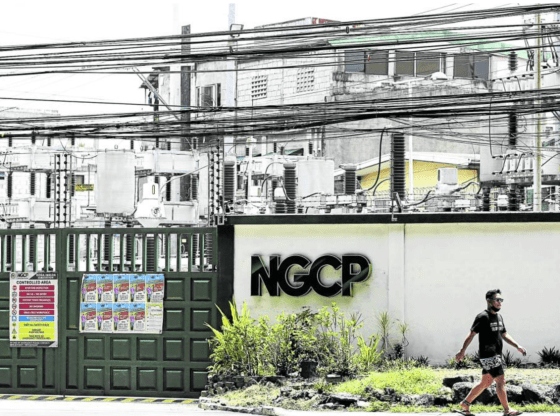


MANILA, Philippines — Extending a week-long streak of fragile operating reserves as heavy baseload plants remain crippled, regional electricity networks are running with nearly zero room for error. The National Grid Corporation of the Philippines (NGCP) has officially placed the Visayas grid under a yellow alert.
The emergency declaration highlights a persistent regional supply deficit that has left central Philippine islands heavily dependent on fragile external power links.
The grid operator’s updated advisory sets a strict monitoring timeline for local utility distribution networks:
                        [ THE VISAYAS ELECTRICITY SQUEEZE ]
                                         │
         ┌───────────────────────────────┴───────────────────────────────┐
         ▼                                                               ▼
   [ CONTINGENCY ALERT MATRIX ]                                    [ AVAILABLE SUPPLY TRACK ]
 • **The Evening Peak:** The active yellow alert will take effect  • **2,663 MW Grid Capacity:** Total available power for the
   from **6:00 PM to 8:00 PM** on Friday.                           • region is sitting at **2,663 megawatts (MW)**.
 • **Thin Operational Buffer:** The system's margin is shrinking   • **2,441 MW Peak Demand:** Forecasted demand is expected to
   as electricity consumption climbs across urban centers.         • hit **2,441 MW** during the evening rush.
The compounding power crunch is driven by an ongoing lack of local power generation, heavily worsened by recent environmental disruptions:
[ THE CENTRAL PHILIPPINES ENERGY DEFICIT ] │ ▼[ Forced Coal Plant Outages ]──► The grid is missing a massive **863.3 MW of capacity** because three large local coal-fired power plants remain completely offline or are running at severely reduced rates. │ ▼[ The Mindanao Interconnection ]──► The region's primary backup safety net—power imports from the south—remains heavily limited due to plant trippings caused by the recent **magnitude-7.8 Mindanao earthquake**. │ ▼[ Hot Weather Strain ] ──► Despite the slow shift into the rainy season, high humidity continues to push cooling appliances to their limits, keeping demand near record highs.
When the country’s electricity superhighway issues a yellow alert, it means that while the current supply can meet baseline demand, the system lacks the backup reserves needed to handle a sudden component failure.
| Active Grid Region | Current Available Capacity | Forecasted Peak Demand | Primary System Constraint / Vulnerability |
| Visayas Power Grid | 2,663 MW | 2,441 MW | Current Alert Zone; forced shutdowns at major plants like TVI and PEDC 3 leave the grid vulnerable to immediate evening brownouts. |
| Mindanao Power Grid | 2,731 MW | 2,611 MW | Shaken by the magnitude-7.8 earthquake, resulting in fragile infrastructure and restricted power transfers to neighboring island groups. |
What a Yellow Alert Means for Consumers: A yellow alert is an official system warning. While widespread rotational brownouts are not explicitly planned, any sudden, additional plant failure during this tight two-hour window could quickly push the region into a red alert—triggering localized blackouts to prevent a total grid collapse.
The NGCP’s June 12 yellow alert declaration is a stark reminder that the Visayas region is operating on borrowed time. While local distribution teams have managed to keep the lights on so far, a razor-thin reserve margin means the entire central grid is exposed to unexpected failures. The structural problem stems from an ongoing reliance on a few large coal-fired plants like Therma Visayas Inc. (TVI) Units 1 and 2 and Panay Energy Development Corp. (PEDC) Unit 3. With those facilities offline for repairs and the Mindanao-Visayas submarine cable limited by recent earthquake damage, the region has lost its primary backup options. As energy panels look to investigate these recurring plant shutdowns throughout 2026, Visayas municipal units must prioritize building local solar and wind installations to provide the independent baseload support needed to secure long-term stability.