
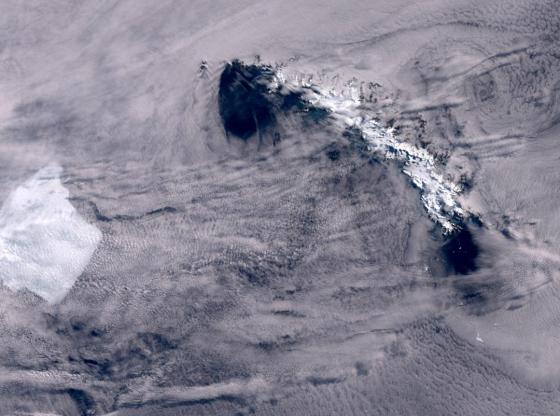

The world’s biggest iceberg, A23a, has run aground roughly 70 kilometers (45 miles) from South Georgia Island, possibly preventing a major ecological disruption in the Antarctic wildlife haven, researchers confirmed on Tuesday.
The iceberg, which calved from Antarctica in 1986, is twice the size of Greater London and weighs nearly one trillion tonnes. Since breaking free in 2020, it has been drifting north, sparking fears it could block access to feeding grounds for penguins and seals that breed on South Georgia.
Current Status: Stuck but Stable
According to the British Antarctic Survey (BAS), satellite images show A23a has remained stationary since March 1.
“If the iceberg stays grounded, we don’t expect it to significantly affect local wildlife,” said BAS oceanographer Andrew Meijers, who has been tracking A23a’s movements.
While it is unclear whether the iceberg is permanently stuck, its current position may actually benefit the ecosystem by stirring up nutrients as it melts.
Impact on Wildlife and Climate
A closer collision with South Georgia could have forced seals and penguins to travel farther for food, increasing mortality rates. The island’s wildlife has already suffered due to a recent bird flu outbreak.
Although massive icebergs are a natural part of Antarctica’s cycle, Meijers warned that Antarctic ice shelves have lost 6,000 billion tonnes of mass since 2000, with climate change accelerating ice loss.
Scientists warn that a 1.5 to 2.0°C rise in global temperatures could trigger irreversible sea level rise, putting coastal communities at risk.