
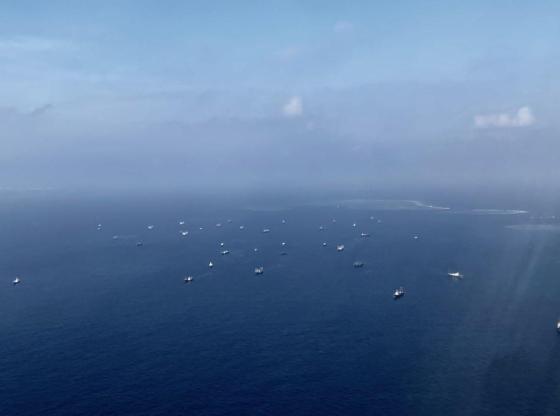

Amid a fishing moratorium unilaterally imposed by China in the South China Sea (SCS), the Philippine Navy reported on Tuesday that 122 Chinese vessels were monitored in various features of the West Philippine Sea (WPS) from May 21 to 27.
Vessel Monitoring Details
Navy Spokesperson for the WPS Commodore Roy Vincent Trinidad provided a breakdown of the Chinese vessels observed:
- Bajo de Masinloc: 5 Chinese Coast Guard vessels (CCGVs), 14 Chinese maritime militia vessels (CMMVs)
- Ayungin Shoal: 5 CCGVs, 17 CMMVs
- Pag-asa Island: 1 CCGV, 1 PLAN ship, 34 CMMVs
- Kota Island: 1 CMMV
- Lawak Island: 1 CMMV
- Panata Island: 3 CMMVs
- Patag Island: 2 CCGVs, 2 CMMVs
- Sabina Shoal: 2 CCGVs, 4 PLAN ships, 30 CMMVs
Commodore Trinidad emphasized that the Philippine Navy does not recognize the Chinese fishing moratorium in the SCS, including the WPS. “The Philippine Navy does not recognize this provocative statement nor will we be deterred in performing our mandate of securing the welfare of Filipinos wherever he/she is — on land or sea,” Trinidad stated.
Increased Patrols and Defense Measures
Following the shift of the Philippine military to external defense and the implementation of the Comprehensive Archipelagic Defense Concept (CADC), patrols in the WPS, including Bajo de Masinloc and the northern islands, have been increased.
Diplomatic Protests and International Law
On Monday, the Department of Foreign Affairs (DFA) protested China’s fishing ban, asserting that it violated international law and undermined the Philippines’ sovereignty and maritime rights. Manila does not recognize China’s May 1 to September 16 fishing moratorium, which includes the Philippines’ maritime zones.
“The Philippines called on China to cease and desist from the conduct of illegal actions that violate the Philippines’ sovereignty, sovereign rights, and jurisdiction in its maritime zones,” the DFA stated. The DFA also urged China to comply with international law, specifically the 1982 United Nations Convention on the Law of the Sea (UNCLOS) and the 2016 Arbitral Award, and adhere to the 2002 Declaration on the Conduct of Parties in the South China Sea.
China’s Expansive Claims and Regional Tensions
China’s fishing ban announcement followed a week after it declared it would detain foreigners intruding into its claimed areas in the South China Sea. China asserts claims over almost the entire South China Sea, overlapping with territorial claims from the Philippines, Vietnam, Malaysia, and Brunei. Despite the 2016 ruling from an international arbitration tribunal in The Hague, which found China’s claims had no legal basis, Beijing does not recognize this decision.