
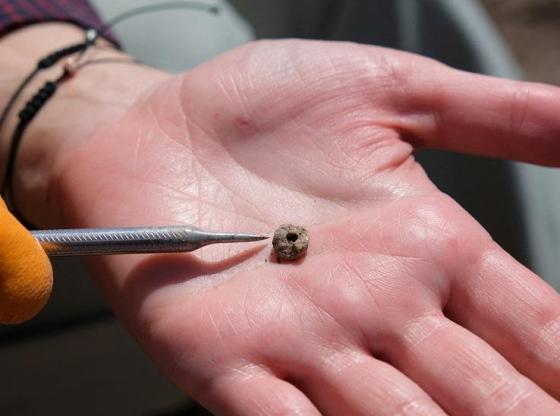

Archaeologists in Turkey have uncovered evidence at an 11,000-year-old burial site in Boncuklu Tarla, Mardin province, that ancient humans adorned themselves with piercings, similar to contemporary practices. This discovery, derived from stone ornaments found near skeletal remains, provides tangible proof of body piercings being used as a form of self-expression and identity in prehistoric times.
The small, thin, pointed stones, previously unearthed in various locations within the Fertile Crescent, have now been definitively identified as adornments for the ears and lips, thanks to their positioning on the skeletons. This marks a significant advancement in understanding the cultural practices of ancient populations in this region.
Emma Louise Baysal, a leading archaeologist from Ankara University, highlighted the connection between these ancient customs and modern-day practices, noting the human concern with appearance and self-presentation. The site’s name, ‘Beaded Field,’ stems from the numerous beads found there by local farmers, pointing to a long-standing tradition of ornamentation.
This excavation not only sheds light on the social habits of Neolithic hunter-gatherers but also bridges the gap between past and present, showing the continual human penchant for adornment and self-expression through body modification.