


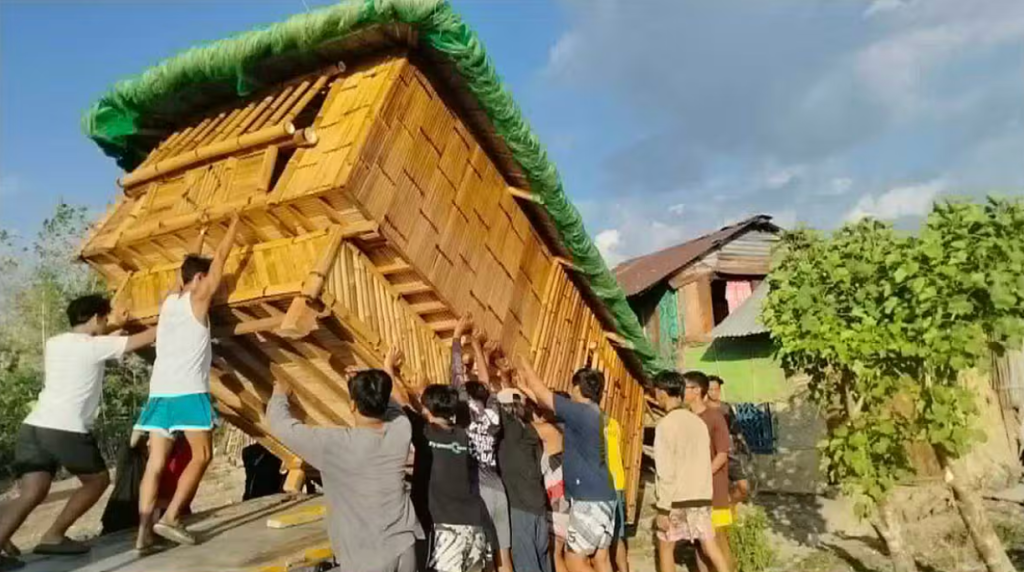
BAYAMBANG, Pangasinan — In a heartwarming display of the traditional bayanihan spirit, six marginalized families in this town became the first homeowners of a local government housing initiative on Saturday, May 9, 2026. The families received new nipa huts (bahay kubo) funded entirely through community donations and charity efforts.
The project was primarily financed by the proceeds of the “Grand Ukay for a Cause,” a charity bazaar held during the town’s fiesta last April, alongside a personal donation from Mayor Niña Quiambao and support from the Rotary Club of Bayambang.
The beneficiaries were selected through a rigorous validation process by the DSWD and the Municipal Social Welfare and Development Office, focusing on those living in the most dire conditions.
- Extreme Poverty: One beneficiary family had been staying in a borrowed pigpen for years, while another lived in a makeshift shelter of bamboo and scrap iron.
- The Beneficiaries:
- Rhealyn Diaz (Buayaen)
- Elizabeth Dignos (Ligue)
- Rose Marie Castillo (Buayen)
- Eliza de Guzman (Buenlag 2nd)
- Annalyn Bato (Dusoc)
- Lea Honrado (Duera)
To ensure the new homes are both sustainable and comfortable, each nipa hut was equipped with a solar power package, including:
- Solar panels
- Solar-powered lights
- Solar fans
For households lacking basic sanitation, the local government also constructed private comfort rooms, with beneficiaries contributing to the construction labor or costs to instill a sense of ownership.
The delivery of the homes itself became a community event. Because some of the beneficiaries live in remote areas with roads too narrow for delivery trucks, neighbors and local residents gathered to manually carry the nipa huts to their final locations—re-enacting the classic Filipino tradition of moving a bahay kubo by hand.
This turnover marks the completion of the first batch of a larger program. The LGU intends to provide a total of 35 nipa huts to qualified families as part of its ongoing social welfare and housing agenda.
“They were really marginalized,” said Municipal Information Officer Resty Odon. “This project is about giving them a safe place to call home and the dignity they deserve.”