

Special Delivery
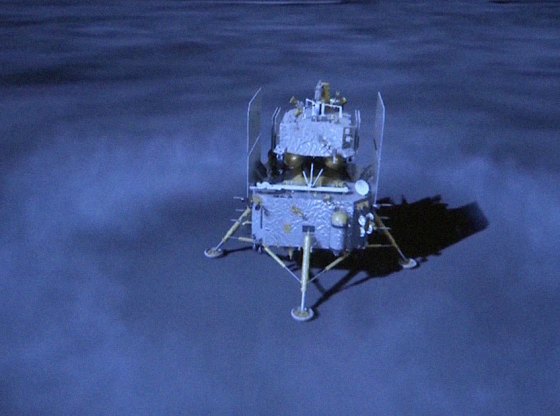
China’s Chang’e-6 lunar mission achieved a historic milestone by landing on the Moon’s far side, gathering samples, and launching back within just 48 hours. This groundbreaking mission marked the first-ever sample collection from the Moon’s far side.
During its brief stay, the lander deployed several scientific instruments, including the European Space Agency’s (ESA) Negative Ions at the Lunar Surface (NILS) instrument. The NILS instrument immediately detected negative ions, generated by solar wind interacting with the lunar surface.
Ion Maiden
On Earth, the magnetic field protects the surface from these charged particles. However, the Moon lacks such protection, making it vulnerable to solar wind. These interactions create negatively charged particles that remain on the lunar surface, providing a unique opportunity for study.
The NILS instrument faced initial challenges, including reboots and blackouts due to extreme lunar conditions, but eventually succeeded in sending back valuable data. This information could significantly enhance our understanding of similar environments on other airless celestial bodies.
“This was ESA’s first activity on the surface of the Moon, a world-first scientifically, and a first lunar cooperation with China,” said Neil Melville, ESA’s technical officer for the experiment. “We have collected an amount and quality of data far beyond our expectations.”
Exploring New Frontiers
The study of these negative ions on the Moon can shed light on surface environments of other airless bodies in our solar system. “These observations on the Moon will help us better understand the surface environment and act as a pathfinder to explore negative ion populations in other airless bodies in the Solar System,” said NILS principal investigator Martin Wieser.