
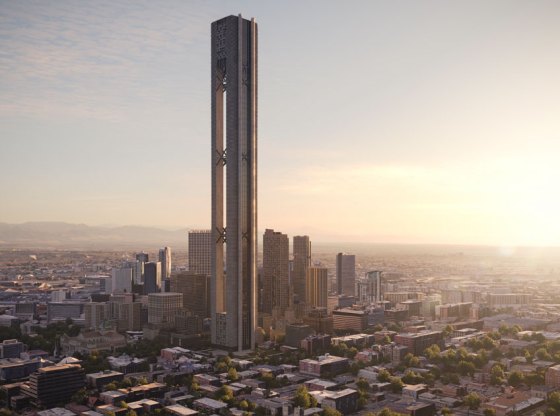

The architects behind Dubai’s Burj Khalifa — the world’s tallest building — are collaborating with a startup to transform future skyscrapers into colossal, gravity-powered batteries.
Skidmore, Owings & Merrill (SOM), the engineering and architecture firm known for the One World Trade Center, is teaming up with energy storage startup Energy Vault to create “gravity energy storage systems.” These systems utilize cranes to lift and lower enormous blocks of recycled waste materials, generating electricity when needed most.
The concept is straightforward: during periods of excess renewable energy production, cranes store large amounts of power by lifting the blocks. When demand is high, and energy supply is low, lowering these blocks spins a generator, releasing the stored energy.
Energy Vault CEO Robert Piconi explained, “The combination of our pioneering work in gravity energy storage technology with the global track record and expertise of the most widely renowned engineering, design, and architecture firm in the world will provide the first platform toward delivering accelerated carbon payback in building construction and operation for the first time.”
Must Come Down
Energy Vault has already demonstrated that its platform can scale up to store several gigawatt hours of energy. The company has multiple projects underway globally.
In March, they completed a 100-megawatt-hour facility in China. A smaller pilot system near their headquarters in Switzerland can store five megawatts of power.
This solution addresses a significant challenge: while sustainable energy production is increasing, efficiently storing that energy is complex. Green energy generation may not always coincide with peak demand times, such as solar energy peaking during the day while demand is highest after sunset.
Apart from using cranes to store potential energy by lifting tons of material, other gravity-based solutions include pumped-storage hydropower, which involves pumping water up from retired mine shafts and generating electricity as it flows back down through turbines.
Despite several projects underway, Energy Vault still needs to prove if this idea can scale to meet growing energy demands. While it’s a clever engineering solution, the implementation details will be crucial.