
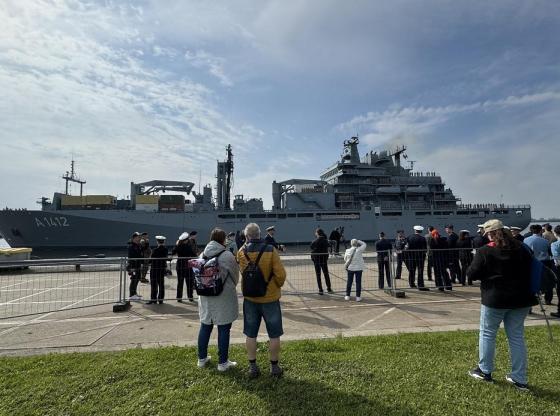

In a significant move marked by geopolitical implications, Germany dispatched two warships to the Indo-Pacific on May 7, 2024, underlining its commitment to safeguarding international maritime routes and supporting the rules-based international order. This deployment comes at a time when tensions between China and Taiwan and disputes over the South China Sea are escalating, posing threats to the freedom of navigation and global trade.
The vessels involved in this mission include the supply ship Frankfurt am Main, which departed from Wilhelmshaven, and the frigate Baden-Wuerttemberg, which set sail from the Spanish harbor of Rota. These ships are scheduled to rendezvous at sea and then continue their journey to Halifax, Canada, before proceeding to the Indo-Pacific region.
This strategic deployment is aimed at reinforcing the safety and unimpeded nature of critical trade routes through which approximately 40% of Europe’s foreign trade passes, notably the South China Sea. Germany’s Defence Minister, Boris Pistorius, emphasized the importance of this mission during his address at the Wilhelmshaven naval base. “Looking the other way, showing no presence in the Indo-Pacific in support of the international rules-based order, that’s not an option for Germany,” Pistorius stated, affirming Germany’s proactive stance in international security matters.
The South China Sea, a vital maritime corridor, has been a hotspot of contention, largely due to Beijing’s expansive territorial claims that conflict with an international tribunal ruling invalidating China’s assertions over the area. Additionally, the issue of Taiwan, which China claims as its territory, adds to the region’s complexity, with Taiwan vehemently opposing such claims.
The route that the German ships will take includes passing through the South China Sea, though it remains unclear whether they will also navigate through the Taiwan Strait—a route previously taken by United States navy vessels, which has been a source of contention with China, Germany’s top trading partner.
In 2021, Germany marked its naval presence in the South China Sea for the first time in nearly two decades, joining other Western nations concerned about China’s expanding territorial ambitions. This move was part of a broader trend of increasing military presence by Western nations in the region, driven by the need to maintain regional stability and support free navigation.
As these warships chart their course through politically sensitive waters, the world watches closely. Germany’s decision to send these vessels is not just about asserting naval power but also about maintaining a balance in a region where power dynamics are rapidly evolving. This development is a clear signal of Germany’s readiness to play an active role in upholding international law and ensuring that maritime trade routes remain open and free from unilateral control.