
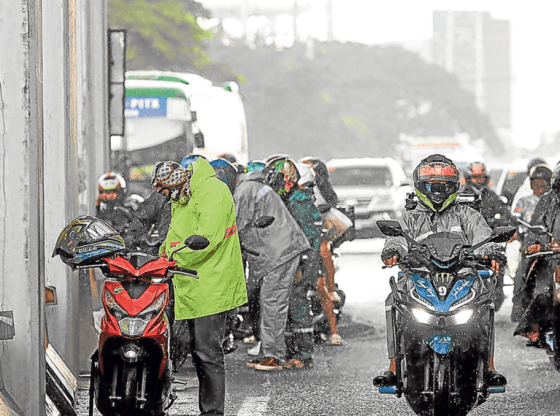

Rising road crash incidents in Metro Manila have sparked a debate among motorists and safety experts, with many arguing that penalizing drivers is not enough to address the growing number of fatal accidents.
Recent data from the Metropolitan Manila Development Authority (MMDA) shows that while human error remains the primary cause of road mishaps, structural failures—such as obstructed traffic signs and poorly marked road humps—are significant contributing factors. Analysts say these issues highlight how gaps in urban planning can undermine safety efforts, particularly for the country’s 1.58 million motorcycle riders who are most vulnerable to fatal outcomes.
Some transport observers believe that the current system may be unfairly testing the discipline of riders without providing the necessary environment for safety. How the government and transport network companies (TNCs) address the pressure of delivery quotas and the lack of specialized training could influence accident rates in the coming years.
Road safety has long been viewed as a complex interplay between human behavior and engineering. However, for many daily commuters, the focus on driver negligence often overshadows the dangers of unlit “blind” humps and road signs covered by overgrown trees. Any failure to modernize road markings and infrastructure would likely have far-reaching implications for public health and urban mobility.
Experts say that while discipline and patience are vital, they represent only one side of the safety equation. The current rise in crashes serves as a reminder of how localized infrastructure neglect can evolve into a broader public safety crisis.
For many policymakers and analysts, the key concern is shifting the focus from a purely punitive approach to a comprehensive strategy that includes better road maintenance, visible signage, and a review of the labor conditions that force many riders to prioritize speed over safety.