
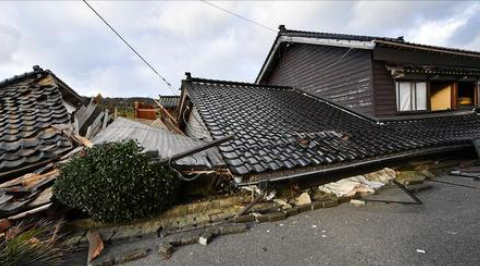

In the aftermath of the devastating New Year’s Day earthquake in Japan, which has so far claimed at least 77 lives, a race against time is underway as rescue teams strive to find survivors before the critical three-day survival window closes on Thursday afternoon. The mayor of Suzu city, Masuhiro Izumiya, emphasized the urgency of the situation in a regional disaster response meeting, stating the need to use every remaining ounce of strength in the rescue efforts. The chances of finding survivors dramatically decrease 72 hours post-earthquake, a challenge compounded by the nearly 600 aftershocks that have struck the Noto peninsula, exacerbating the risk of landslides and further infrastructure damage.
Complications in rescue operations are further intensified by the severed roads and remote location of the hardest-hit areas. Medical worker Shunsaku Kohriki in Wajima city remarked on the unusually challenging road conditions and the anticipated prolonged hardships for evacuees. The quake, registering a magnitude of 7.6, has led to over 33,000 evacuations, with approximately 100,000 homes without water and 30,000 without power in the Ishikawa prefecture. The local infrastructure, including connectivity services provided by NTT Docomo, SoftBank, KDDI, and Rakuten Mobile, remains inconsistent.
The quake’s impact extends to the economic sector, with businesses assessing the damage to their production lines. Japan Display, EIZO, and semiconductor firm Kokusai Electric are in the process of repairing their facilities, while Shin-Etsu Chemical in Niigata has partially resumed operations.