
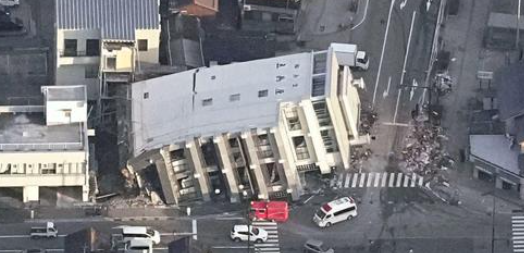

Japan is currently confronting the devastating consequences of a powerful 7.6 magnitude earthquake that struck its west coast, marking the deadliest seismic event in the nation in nearly eight years. As of the latest reports, the tragedy has claimed the lives of over 100 individuals, with more than 200 people still unaccounted for. The Ishikawa prefecture on the island of Honshu bore the brunt of the quake, witnessing extensive destruction of homes and infrastructure.
In the aftermath of the quake, rescue and recovery efforts have been hampered by the extensive damage. The earthquake not only caused significant structural damage but also triggered tsunami waves exceeding one meter in height, leading to further destruction along the coast. The situation was particularly dire in Wajima city, where the highest number of fatalities was recorded, and in Suzu city. Over 500 individuals have sustained injuries, some of them serious.
Amidst the chaos, thousands of Self-Defense Force personnel have been mobilized to deliver essential supplies like food, water, and medicine to the over 32,000 evacuees sheltered in various facilities. However, the delivery of these relief supplies has faced challenges due to damaged roads and other logistical issues. Electricity and water supply disruptions have further complicated the situation, with tens of thousands of households still without power.
The Japanese government, under Prime Minister Fumio Kishida, has prioritized life-saving efforts, acknowledging the race against time in rescuing those trapped under the rubble. International support has also been pledged, with U.S. President Joe Biden expressing solidarity and offering assistance.
This earthquake has not only caused immediate distress but also rekindled painful memories of the 2011 disaster in Fukushima, which led to the world’s worst nuclear crisis since Chernobyl. However, no irregularities have been reported in nuclear facilities following this quake.
Transportation has also been severely affected, with major highways and bullet train services disrupted. Some of these services have been restored, but the full extent of the damage to the transportation infrastructure is yet to be ascertained.
This natural disaster serves as a stark reminder of Japan’s vulnerability to seismic events and the continuous need for robust disaster preparedness and response mechanisms.