


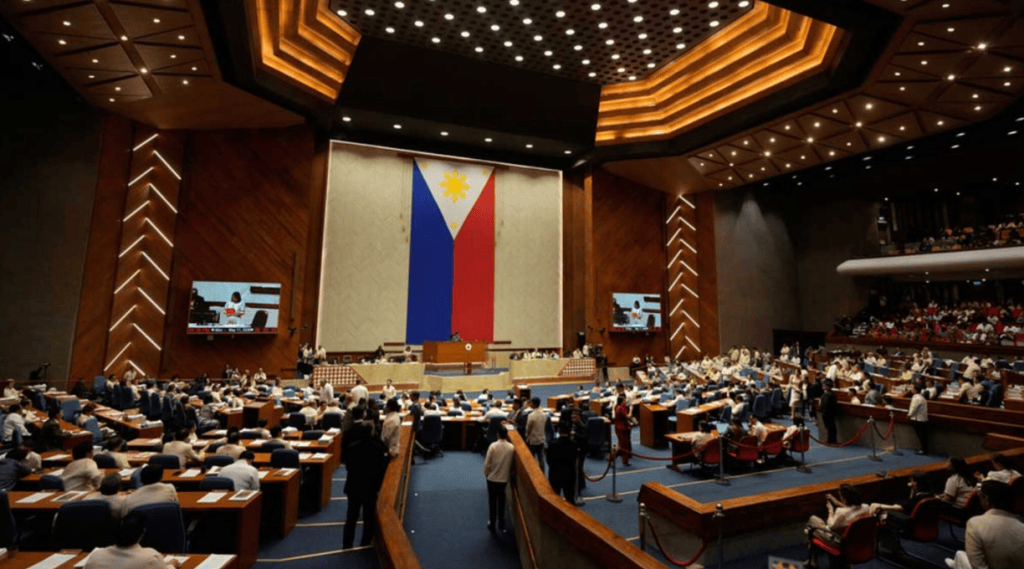
MANILA, Philippines — Taking a major step toward eradicating early-childhood malnutrition and stunting across public classrooms, lawmakers have advanced a primary legislative measure. The House of Representatives has officially approved on second reading a bill that significantly expands the scope and timeline of the country’s school-based feeding program.
The proposed policy shift moves the state away from targeting only “severely wasted” (malnourished) children, transitioning instead into a universal feeding model for early-grade public school learners.
The draft legislation directly amends Republic Act 11037, also known as the Masustansyang Pagkain para sa Batang Pilipino Act, dramatically scaling up the state’s fiscal and logistical obligations:
[Current Framework: Underfunded & Targeted] ──► Covers Only Severely Wasted / Malnourished Students │ ▼ (The 2026 Legislative Pivot)[Proposed Universal Coverage Model] ◄── Automatically Includes ALL Learners from Kindergarten to Grade 3 │ ▼ [Target Infrastructure: Mandates a Full 200-Day Annual Feeding Cycle]
By institutionalizing a full 200-day feeding calendar, the bill ensures that beneficiaries are provided at least one hot, nutrient-dense meal for the entire duration of the academic school year—effectively doubling the current baseline execution targets.
The measure, heavily pushed by key House proponents including Deputy Speaker and Iloilo 1st District Representative Janette Loreto-Garin, introduces strict funding firewalls to prevent administrative leakage.
                           [ PROPOSED FISCAL ALLOCATIONS & GUARDS ]
                                              │
         ┌────────────────────────────────────┴────────────────────────────────────┐
         ▼                                                                         ▼
   [ THE MULTI-BILLION BUDGET SPLIT ]                                        [ ANTI-LEAKAGE STIPULATIONS ]
   • **DepEd Component:** Targets roughly **₱43.2 billion** to cover basic     • **Zero Administrative Skimming:** Rep. Garin stressed that the
     food commodities for nearly 8 million Kindergarten to Grade 3 students.  proposed funds are strictly restricted to direct food production.
   • **DSWD Allocation:** Pipelines approximately **₱10 billion** to run     • **No Overhead Subsidies:** No percentage of the budget may be diverted
     parallel feeding programs across state-backed day care facilities.      to buy kitchen tools, hold orientations, or pay for office travel.
An additional, critical economic mechanism embedded in the bill mandates that the raw ingredients—particularly fresh milk, grains, and vegetables—must be sourced entirely from local farmers and fisherfolk, injecting billions of pesos directly back into the countryside agricultural sector.
The legislative push comes amid alarming data from the Congressional Commission on Education (EDCOM II) highlighting the long-term cognitive damage caused by chronic malnutrition. Proponents argue that proper early nutrition is directly linked to higher classroom attendance, sharper cognitive development, and better long-term national productivity.
| Program Implementation Phase | Target Student Beneficiaries | Expected Operational Milestones |
| Phase 1 Deployment | Universal coverage of all public school children from Kindergarten to Grade 3. | Establishes decentralized provincial central kitchens to standardize hot meal preparation. |
| Supplementary Tracks | Continued targeted tracking and feeding for severely undernourished pupils from Grades 4 to 6. | Integrates localized Gulayan sa Paaralan (school vegetable gardens) to supplement raw food supplies. |
Because the measure forms part of the priority legislative agenda listed by the Legislative-Executive Development Advisory Council (LEDAC) under President Ferdinand R. Marcos Jr., house leaders expect the bill to smoothly clear its third and final reading before the midyear break. By transforming school nutrition into a baseline human capital investment, Congress intends to ensure that no young Filipino child is forced to learn on an empty stomach.