


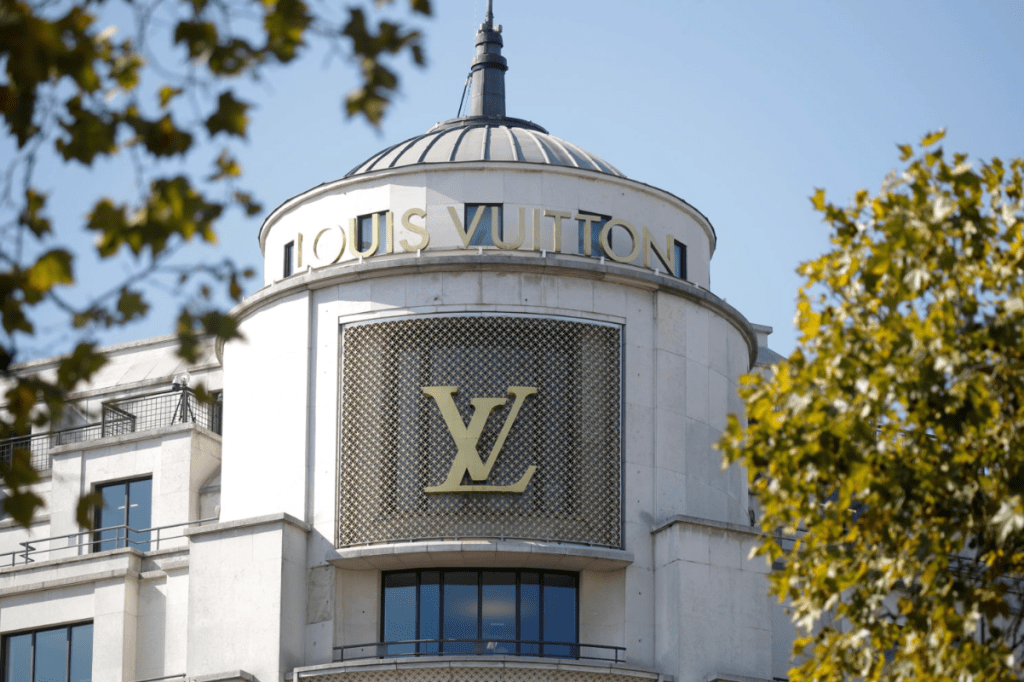
PARIS, France — LVMH, the world’s leading luxury goods conglomerate, reported a 13 percent decline in net profit for 2025, falling to 10.9 billion euros ($13.1 billion).
The decline, announced on Wednesday, January 28, 2026, was attributed to a combination of exceptional taxes on large French corporations and a cooling global appetite for high-end goods amidst rising tariffs and geopolitical instability.
Revenue and Performance Breakdown
- Overall Sales: Total revenue dropped by 5 percent to 80.8 billion euros in 2025.
- Fashion & Leather Goods: The group’s flagship division, which includes Louis Vuitton and Dior, saw an 8 percent drop in sales. This is a significant shift for a division that usually serves as the group’s primary growth engine.
- Wines & Spirits: The hardest-hit sector, recorded a 9 percent decline in sales as consumer sentiment toward luxury champagnes and spirits weakened.
- Q4 Momentum: Revenue in the final quarter of 2025 alone dropped by 5.1 percent compared to the same period in 2024.
Factors Behind the Slump LVMH, which also owns Tiffany & Co. and Moët & Chandon, pointed to a “disrupted geopolitical and economic environment” as the primary reason for the subdued figures:
- Taxation: An exceptional tax levied on large French companies significantly weighed on the bottom line.
- Tariffs: Global trade tensions and the imposition of new tariffs have dampened consumer demand in key markets.
- Regional Highlights: Despite the overall downturn, LVMH noted a positive trend in the United States, where sales grew in the second half of 2025 due to solid local demand.
Outlook for 2026 Despite the challenging 2025 results, the group maintains a “confident” outlook for the coming year. LVMH stated it had shown “good resilience and maintained its innovative momentum,” and remains focused on brand desirability and operational excellence.
The results are being closely watched by the global fashion and finance sectors as a bellwether for the luxury market’s health heading into 2026, particularly as brands navigate a transition year of shifting consumer habits and economic pressures.