
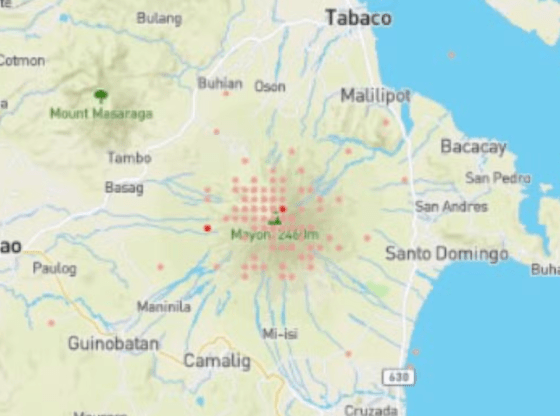


LEGAZPI CITY, Philippines — Monitoring teams have detected a noticeable spike in subterranean activity beneath the country’s most active volcano, prompting warnings for residents to stay clear of its slopes.The Philippine Institute of Volcanology and Seismology (Phivolcs) recorded 29 volcanic earthquakes and extensive seismic movements at Mayon Volcano over a recent 24-hour observation window.
The increased activity highlights ongoing volcanic unrest across the Bicol region.
The daily summary from Phivolcs indicates that magma migration and gas pressures are actively causing fracturing beneath the volcano’s iconic symmetric structure:
                  [ 24-HOUR SEISMIC MONITORING GRID ]
                                   │
     ┌─────────────────────────────┴─────────────────────────────┐
     ▼                                                           ▼
[ 29 VOLCANIC EARTHQUAKES ]                                [ 54 ROCKFALL EVENTS ]
 • Triggered by internal pressure, fluid movement,          • Caused by unstable lava fragments breaking off the
   and subsurface rock fracturing.                            growing summit dome and tumbling down the upper slopes.
In addition to earthquakes and rockfalls, sensors detected one pyroclastic density current (PDC) event—a fast-moving avalanche of hot gas, ash, and volcanic fragments—alongside a continuous volcanic tremor that lasted for two minutes and 30 seconds.
The volcano’s internal gas-venting system remains highly active, forcing significant amounts of toxic gas into the atmosphere:
[Sulfur Dioxide (SO2) Outflow] ──► Averaging 2,148 Tons / Day (Measured May 22) │ ▼ (The Plume Behavior)[Moderate Volcanic Gas Plumes] ◄── Drifting 700 Meters High Toward the West-Northwest
Phivolcs observed a “moderate” emission of gas plumes rising up to 700 meters before being carried away by regional wind patterns. Despite these emissions, the volcano’s structure continues to show long-term inflation, indicating that fresh magma is still accumulating deep within the volcano’s core.
| Monitoring Indicator | Current Status / Directives |
| Current Alert Level | Alert Level 1 (Low-level unrest, persistent danger of sudden eruptions) |
| Exclusion Perimeter | Strict enforcement of the 6-Kilometer Permanent Danger Zone (PDZ) |
| Primary Hazards | Rockfalls, landslides, sudden steam-driven phreatic explosions, and PDCs |
Phivolcs reiterated that while Mayon remains at Alert Level 1, the public is strictly prohibited from entering the 6-kilometer PDZ. State volcanologists warned that sudden, hazardous steam-driven (phreatic) explosions, rockfalls, and ash expulsions can occur unexpectedly without prior warning, posing an immediate threat to anyone on the volcano’s upper and middle slopes.
Civil aviation authorities have also been advised to instruct pilots to avoid flying close to the volcano’s summit, as airborne ash and abrasive fragments from sudden venting events can cause severe mechanical failure to aircraft engines.