


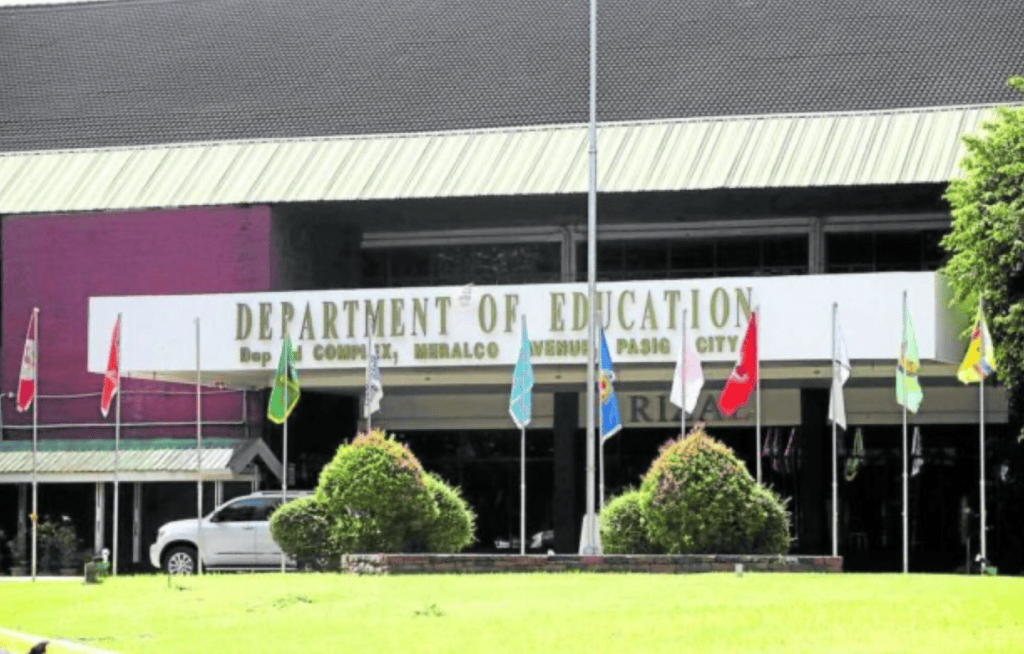
MANILA, Philippines — A major structural overhaul of the country’s basic education system has been elevated to the judiciary, with educators warning that a streamlined curriculum threatens both academic standards and teacher livelihoods. A private school educator has formally petitioned the Supreme Court to halt the implementation of the Department of Education’s (DepEd) revised Senior High School (SHS) curriculum, scheduled for full rollout in the upcoming school year.
The 24-page petition for certiorari and prohibition seeks an immediate Temporary Restraining Order (TRO) against DepEd Memorandum Order No. 12, s. 2026, which establishes the “Strengthened SHS Curriculum” for incoming Grade 11 students.
The core conflict stems from DepEd’s drastic reduction of specialized academic paths. The traditional framework—which allowed students to choose among four specific disciplines—is being dismantled in favor of an aggressively simplified model:
          [ THE ORIGINAL FOUR SHS TRACKS ]                      [ THE 2026 STREAMLINED MODEL ]
   • Accountancy, Business, and Management (ABM)
   • Science, Technology, Engineering, & Math (STEM)  ───►       Two Primary Consolidated Strands:
   • Humanities and Social Sciences (HUMSS)                        1. Academic Strand
   • General Academic (GA) Strand                                  2. Technical-Professional Strand
Beyond collapsing the tracks, the memorandum drastically cuts the academic workload, reducing the original 15 core subjects down to just five foundational subjects. While incoming Grade 12 students will be allowed to finish their studies under the old system, the next batches of Grade 11 students will be funneled entirely into the new dual-strand grid.
The case was brought forward by Barry Tayam, an SHS teacher at San Beda College Alabang. Tayam argues that DepEd is treating the domestic education sector as a “legal laboratory for trial-and-error policies,” presenting several structural failures to the high court:
- Livelihood Threat: By wiping out two-thirds of the core subject catalog, the structural shift directly reduces the standard teaching loads of senior high faculty. Tayam notes this will eliminate overload compensation and lead to sweeping layoffs, particularly among probationary, contractual, or part-time teachers.
- Erosion of Quality: The petition stresses that cutting essential learning competencies is fundamentally incompatible with promoting a high standard of education.
- Procedural Shortcuts: Tayam pointed out that DepEd prematurely declared its localized pilot testing phases a success without waiting for an official evaluation, formal study, or recommendations from the Second Congressional Commission on Education (Edcom II)—the legislative body specifically tasked with reviewing the national basic education system.
The legal challenge also targets the newly expanded work immersion module under the technical-professional track, which now requires a minimum of 320 hours of on-the-job training.
                            [ IMMERSION CAPACITY CRISIS ]
                                          │
         ┌────────────────────────────────┴────────────────────────────────┐
         ▼                                                                 ▼
   [ LACK OF LOCAL ABSORPTION ]                                      [ EXPERT TRAINING DISPLACEMENT ]
   • Petitioner argues local businesses lack the physical capacity    • High school interns are forced to compete directly for
     to suddenly absorb an massive influx of high school students.      slots against college students who already face massive
                                                                        hurdles securing their own mandatory graduation training.
“Instead of equipping young learners with the capacity to establish businesses and generate employment, an extended immersion model risks creating a logistical bottleneck.” — Barry Tayam, Petitioner
By characterizing the sudden curriculum constriction as a “grave abuse of discretion,” the petition places the Marcos administration’s flagship educational reform on thin legal ice. The Supreme Court’s impending decision on whether to grant the TRO will determine if millions of students nationwide will transition into the streamlined two-strand track this coming school year, or if DepEd will be legally forced to revert to its traditional multi-track framework.