
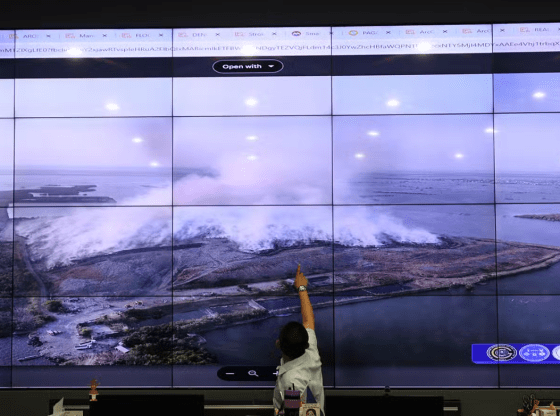

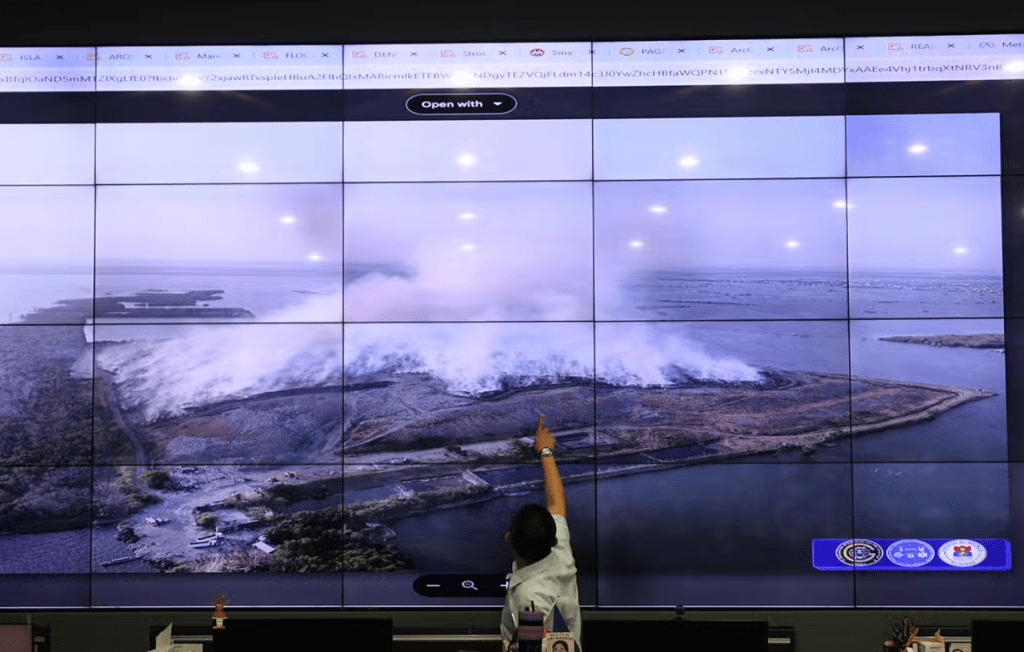
MANILA, Philippines — Nearly two weeks since a massive blaze ignited at a sanitary landfill in Navotas City, the Philippine Space Agency (PhilSA) warned on Friday, April 24, 2026, that air quality across Metro Manila has yet to return to normal levels. Satellite data and ground reports indicate that “smoldering conditions” continue to release significant concentrations of harmful pollutants into the atmosphere.
According to PhilSA, nitrogen dioxide (NO2) levels over the national capital region remain elevated compared to baseline data recorded before the fire broke out on April 6.
PhilSA has been utilizing satellite imagery and thermal drone data to track the spread of the smoke plume:
- Pollutant Focus: Nitrogen dioxide, a primary component of smoke and a major respiratory irritant, is the main focus of current monitoring.
- Geographic Spread: Earlier in the week, smoke from the Navotas fire was detected as far away as Bataan. As of April 23, the estimated smoke extent continues to cover large portions of Metro Manila and surrounding provinces.
- Diurnal Cycle: Experts noted that while NO2 levels are high in the mornings (the peak observation time being 8:45 a.m.), they tend to decrease slightly throughout the day due to atmospheric processes like sea breezes and the dissolution of the inversion layer.
The prolonged exposure to the smoke has serious implications for public health, particularly for vulnerable populations:
- Respiratory Distress: Breathing air with high NO2 concentrations can irritate airways, aggravating conditions like asthma and leading to coughing, wheezing, and difficulty breathing.
- Long-term Impact: Extended exposure may contribute to the development of chronic respiratory infections.
- Recent Tragedy: The human cost of the blaze was highlighted by the recent death of a woman in Bulacan who had been displaced by the Navotas fire.
The Bureau of Fire Protection (BFP) confirmed that while the main flames have been suppressed, the fire is still “smoldering” beneath layers of waste. This type of fire is notoriously difficult to extinguish as heat remains trapped deep within the landfill, continuously generating toxic smoke.
- Thermal Imaging: Drone images presented by the Manila City Disaster Risk Reduction and Management Department on April 21 show extensive internal damage and “hotspots” that continue to pose a risk of reignition.
- Investigation Calls: Environmental groups and local residents are urging a deeper probe into the cause of the fire and the adequacy of the landfill’s fire suppression systems.
Health officials recommend that residents in affected areas—especially children, the elderly, and those with pre-existing heart or lung conditions—take the following precautions:
- Limit Outdoor Activity: Avoid strenuous exercise outdoors when the smell of smoke is present or when air quality indices are high.
- Indoor Air Protection: Keep windows and doors closed. Use air purifiers with HEPA filters if available.
- Use of Masks: If going outside is necessary, N95 masks are recommended as they are designed to filter out fine particulate matter better than standard surgical masks.
As the smoldering persists, PhilSA and the BFP continue to provide daily updates to help local government units manage the environmental and health impacts of the disaster.