
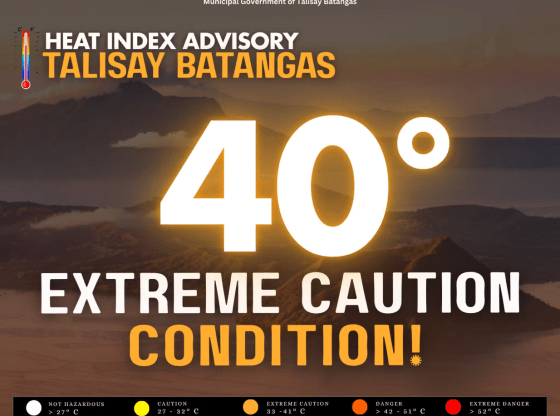

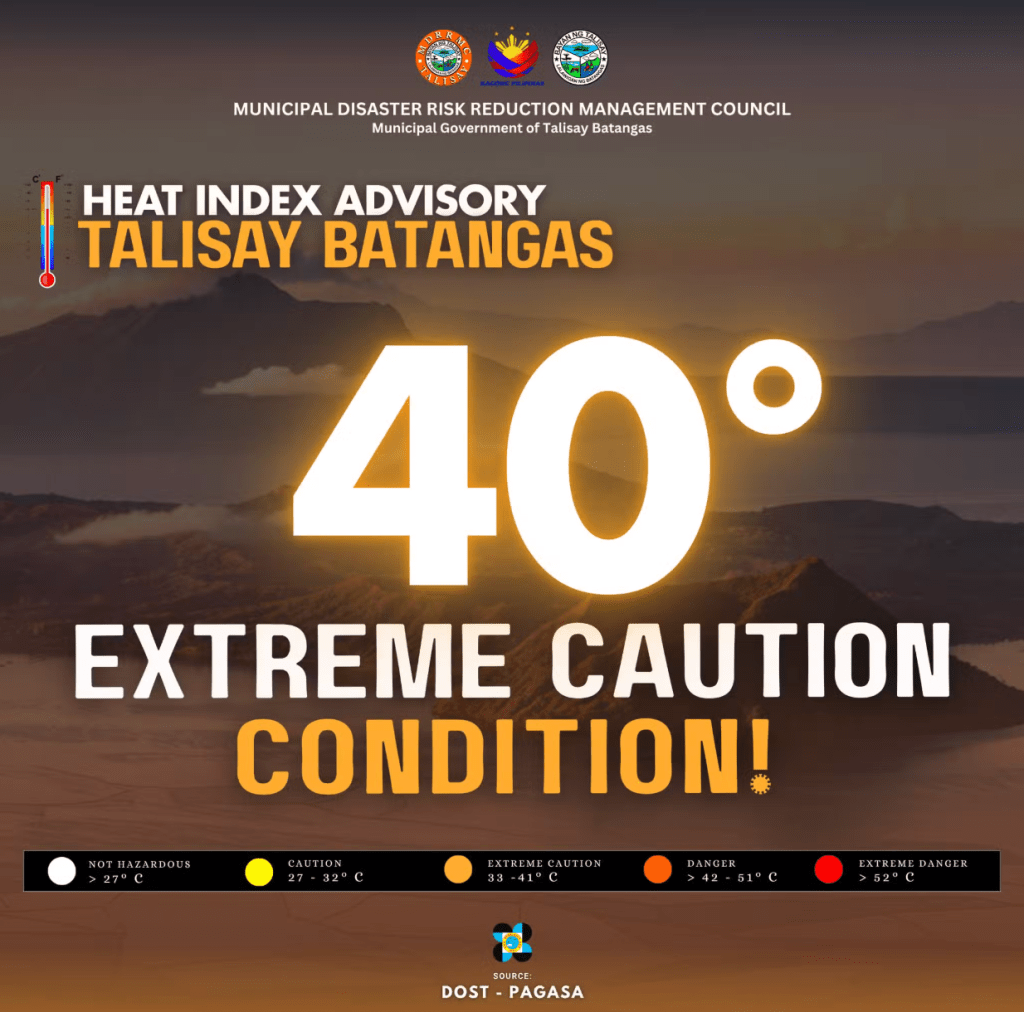
BATANGAS, Philippines — Local authorities in the province of Batangas have issued a public health warning after the heat index in several areas reached a sweltering 40°C (104°F) on Friday, April 24, 2026. The high temperature, exacerbated by the prevailing easterlies and the intensifying effects of the pre-El Niño season, has prompted local government units (LGUs) to activate heat-response protocols.
The state weather bureau, PAGASA, categorized the 40°C reading as under the “Extreme Caution” level, nearing the 42°C threshold for “Danger.”
While the entire province is experiencing high temperatures, the following areas have reported the highest indices:
- Coastal Municipalities: Towns along the coastline are seeing a combination of high heat and humidity, making the “real feel” temperature significantly higher.
- Lowland Urban Centers: High-density areas with less foliage are reporting sustained heat throughout the afternoon hours, specifically between 1:00 PM and 4:00 PM.
The Batangas Provincial Health Office has advised residents to be vigilant against heat-related illnesses:
- Heat Exhaustion and Stroke: Residents are urged to avoid strenuous outdoor activities during peak heat hours. Symptoms such as dizziness, excessive sweating, and rapid pulse should be treated immediately with hydration and cooling.
- Hydration Priority: Health officials recommend drinking at least 8 to 10 glasses of water daily, even if not feeling thirsty, while avoiding caffeinated or alcoholic beverages that can lead to dehydration.
- Vulnerable Groups: Special attention is being given to the elderly, children, and outdoor workers (such as farmers and construction laborers) who are at the highest risk of heat stroke.
In response to the extreme heat, some LGUs in Batangas are considering the following measures:
- Shortened Classes: Some public schools have been authorized to shift to early-morning schedules or implement asynchronous learning to keep students out of classrooms during the hottest part of the day.
- Flexible Work: Private employers are being encouraged to allow frequent “cooling breaks” for employees working in non-airconditioned environments.
The extreme heat is also posing a threat to the province’s livestock and poultry sectors. Farmers have reported increased water consumption among animals and are being advised to ensure proper ventilation in pens and cages to prevent heat stress, which can lead to decreased productivity or mortality.
PAGASA warns that the heat index is likely to remain high across Southern Luzon for the remainder of the week. With the “Super El Niño” forecast for later this year, authorities are bracing for a prolonged dry spell that could further elevate temperatures and strain the region’s water and power resources.
“We are asking the public to stay indoors as much as possible and to look out for one another. If you see someone showing signs of heat exhaustion, bring them to a shaded area and seek medical help immediately,” a local disaster risk reduction official stated.