
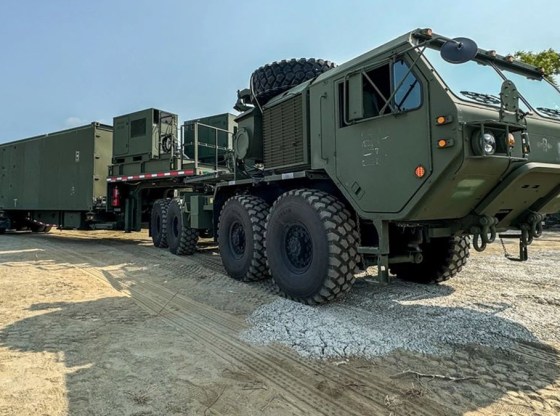

The United States has introduced a new missile system, known as Typhon, to the Philippines, marking its debut during recent joint military exercises with the Philippine military. Despite this significant development, the US has no plans to permanently station the system in the Philippines, according to a senior US defense official.
Strategic Deployment in Northern Luzon
The Typhon system, capable of launching Tomahawk and SM-6 missiles, was deployed to Northern Luzon as part of a series of large-scale military exercises. This deployment is particularly noteworthy given the strategic location near Taiwan and the proximity to Chinese military outposts in the South China Sea. While the exact location of Typhon’s deployment was not disclosed, photos indicated its presence at Laoag International Airport in Ilocos Norte province.
Enhancing Defense Capabilities and Interoperability
The deployment of Typhon aims to enhance interoperability, readiness, and defense capabilities in coordination with the Armed Forces of the Philippines. The system, which includes a battery operations center, four launchers, prime movers, and modified trailers, is part of the US Army’s efforts to strengthen multi-domain fires and increase military flexibility in response to regional tensions.
China’s Response to the Deployment
China has expressed strong objections to the deployment of the Typhon system, accusing the US of attempting to gain a unilateral military advantage and exacerbating regional tensions. The deployment comes amidst escalating aggression by China in the West Philippine Sea, part of the Philippines’ exclusive economic zone. Beijing’s claims over nearly the entire South China Sea overlap with those of several Southeast Asian nations and have been a source of heightened geopolitical friction.
Ongoing Military Exercises and Regional Stability
The US and the Philippines recently concluded the annual exercise Balikatan, described as the most complex yet, involving 17,000 troops and running from April 22 to May 10 in various parts of Luzon. Such exercises are seen as vital for maintaining peace and stability in the region, serving as a deterrent to potential conflicts.
The exercises and deployments like Typhon are also part of broader strategic efforts under the Mutual Defense Treaty, which binds the US and the Philippines to defend each other in case of an armed attack.
Future Plans and Coalition Building
While there are no immediate plans to permanently station the Typhon system in the Philippines, the US intends to continue exercises with the Philippine military and ensure infrastructure is in place for rotational forces. This approach highlights the US’s commitment to building partnerships rather than coercive relationships, contrasting with the tactics employed by the People’s Republic of China in the region.
The presence of Typhon and the conduct of joint military exercises underscore the strategic alliances between the US and the Philippines, aimed at upholding security and stability amidst the complex dynamics of Southeast Asian geopolitics.