


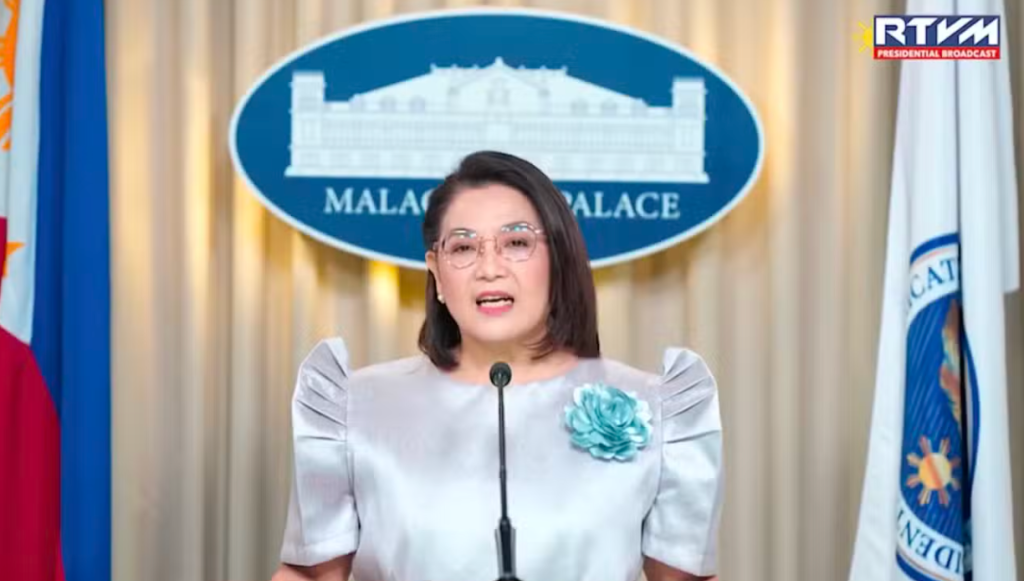
MANILA, Philippines — While expressing absolute structural support for localized measures that improve academic focus, Malacañang has raised heavy regulatory questions regarding the harsh penalties behind a newly enforced provincial ordinance. Palace Press Officer Undersecretary Claire Castro stated that while the executive branch praises the intent of a total campus cellphone ban in Dumanjug, Cebu, it cannot yet determine if the specific disciplinary enforcement mechanisms are legally appropriate or reasonable.
The executive reaction follows a highly controversial directive issued by Dumanjug Mayor Efren Guntrano “Gungun” Gica, which went into effect across all local public schools on Monday, June 29.
The municipal directive was enacted as an emergency safety and academic intervention following recent waves of campus violence across the country—most notably the tragic June 22 school shooting in Tacloban City. Mayor Gica rolled out the total gadget restriction following extensive consultations where roughly 90 percent of local school heads and barangay officials agreed on a strict containment policy.
However, the specific execution clause has sparked intense national debate:
                            [ DUMANJUG GADGET SEIZURE PARAMETERS ]
                                               │
         ┌─────────────────────────────────────┴─────────────────────────────────────┐
         ▼                                                                           ▼
   [ LONG-TERM RETENTION PENALTIES ]                                           [ EXECUTIVE CHALLENGE TO PARENTS ]
 • **The End-of-Year Hold:** Under the official rules, any mobile     • **The Ultimatum:** Anticipating backlash from local families,
   device confiscated from a student inside school premises will be   • Mayor Gica issued a blunt, unyielding social media advisory
   **retained until the conclusion of the academic year**.            • telling critics they are entirely free to leave the town.
 • **No Temporary Releases:** Unlike traditional school rules that    • **Direct Quote:** *"If you do not wish to follow this policy, you
   return electronics at dismissal, Dumanjug's policy blocks students • have the option to transfer your children to another municipality.
   from reclaiming their phones for months.                           • We want our kids to read, study, and interact."*
During a press briefing at the Presidential Communications Office (PCO), Undersecretary Castro explicitly separated the local government’s positive educational goal from its heavy-handed method of enforcement. While private schools across the country routinely mandate that gadgets remain tucked away during active hours, they typically return the property at the end of the day to protect family communication channels.
The Palace’s primary operational assessment balances these two competing realities:
[ THE ADMINISTRATIVE BALANCE OF PROPERTY AND DISCIPLINE ] │ ▼[ Good Intentions ] ──► Castro affirmed the core educational mission, stating: *"His intention is good so that children can concentrate better on their studies... replace screentime with storytime."* │ ▼[ Penalty Concerns ] ──► However, she directly targeted the long-term seizure, noting: *"From what we read, the phones will only be returned after the school year. I cannot say yet whether that penalty is justified or reasonable."* │ ▼[ DepEd Review ] ──► The National Government confirmed it has officially sought a comprehensive policy opinion from **Education Secretary Sonny Angara** before weighing a wider national stance.
When pressed on how households would handle sudden emergency scenarios under a total ban, Mayor Gica downplayed regional anxieties by highlighting Dumanjug’s tight-knit geography. Because the town operates as a smaller, highly localized fourth-class municipality where neighborhoods are tightly interconnected, he argues that traditional communication methods remain fully viable.
Furthermore, the local ordinance explicitly excludes teachers and administrative faculty from the ban. Instructors retain full authority to hold their personal smartphones during operating windows, ensuring an open communications pipeline to reach municipal authorities, security networks, or individual households if a medical or safety crisis manifests on school grounds. While the local government continues to explore parallel student safety nets—including a capital plan to purchase dedicated municipal school buses to secure children on their trips home—the Department of Education’s upcoming review will serve as the final authority on whether Dumanjug’s aggressive long-term property seizure violates foundational learner rights.