


MANILA, Philippines — Philippine air and surface fleets have successfully intercepted and documented an encroaching foreign vessel drifting near the coast of Central Luzon. The Philippine Coast Guard (PCG) actively tracked and issued radio challenges to a China Coast Guard (CCG) vessel discovered deep within the country’s maritime territory on Tuesday.
The intentional deployment directly enforces the state’s standing defense policy against unpermitted foreign surveillance and unauthorized patrols.
The successful interception was made possible by advanced international satellite surveillance frameworks, which flagged the foreign ship’s presence before it could slip deeper into local fishing grounds:
- Dark Vessel Detection: The vessel—officially identified as CCG-4305—was initially flagged drifting within the Philippine Exclusive Economic Zone (EEZ) using data from Canada’s Dark Vessel Detection (DVD) Program, a system built to track ships that turn off their transponders to evade detection.
- The Air Response: Following an immediate order from PCG Commandant Admiral Ronnie Gil Gavan, a PCG Piper Navajo 302 aircraft took off from La Union Airport to conduct a specialized Maritime Domain Awareness (MDA) flight.
- Visual Confirmation: The aircrew visually confirmed the presence of CCG-4305 floating roughly 50.1 nautical miles west of Pundaquit, Zambales.
[Canada's Dark Vessel Satellite Intel] ──► [PCG Air & Surface Scramble] ──► [Visual Intercept off Zambales] │ ┌─────────────────────────────────────────────┴─────────────────────────────────────────────┐ ▼ ▼ [ AIR PATROL: PIPER NAVAJO 302 ] [ SEA PATROL: BRP CAPE SAN AGUSTIN ] Conducted low-altitude document passes Maintained close-proximity watch and and issued numerous unanswered radio challenges. issued continuous warnings throughout the day.
The response from the Chinese vessel followed a pattern of selective radio communication often observed during maritime standoffs in the West Philippine Sea.
When the PCG surface patrol vessel BRP Cape San Agustin reached the coordinates to confront the intruder, the crew of CCG-4305 briefly acknowledged the initial morning radio challenges. However, the Chinese ship subsequently went completely silent, refusing to answer follow-up inquiries or provide any legal justification for lingering inside the Philippine EEZ.
The PCG emphasized that its rigorous, high-visibility challenges are part of a unified directive to systematically document and contest unauthorized incursions.
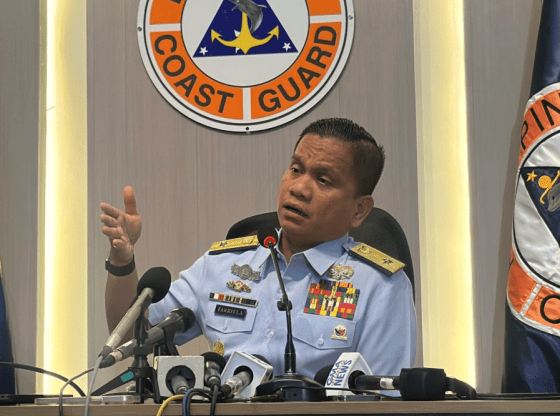
“The PCG’s challenge to the unauthorized incursion of the Chinese ship complies with President Ferdinand R. Marcos Jr.’s order to never allow the normalization of illegal patrols by the CCG within Philippine waters… These activities constitute a direct violation of the United Nations Convention on the Law of the Sea (UNCLOS), the Philippine Maritime Zones Act, and the final and binding 2016 Arbitral Award.” — Rear Admiral Jay Tarriela, PCG Spokesperson for the West Philippine Sea
The Zambales incident unfolds amid a broader uptick in unauthorized maritime movements. Over the weekend, the PCG also documented Chinese marine research vessel Xiang Yang Hong 33 alongside an escort of two CCG ships conducting unpermitted scientific research operations at Cays 2 and 3 near Pag-asa Island, forcing local authorities to continuously ramp up domain monitoring operations across the country’s western seaboards.