


MAKATI CITY, Philippines — In a major step toward modernizing the country’s naval capabilities, the Philippines and Japan have officially established a working group to fast-track the transfer of Japanese destroyers and patrol aircraft.
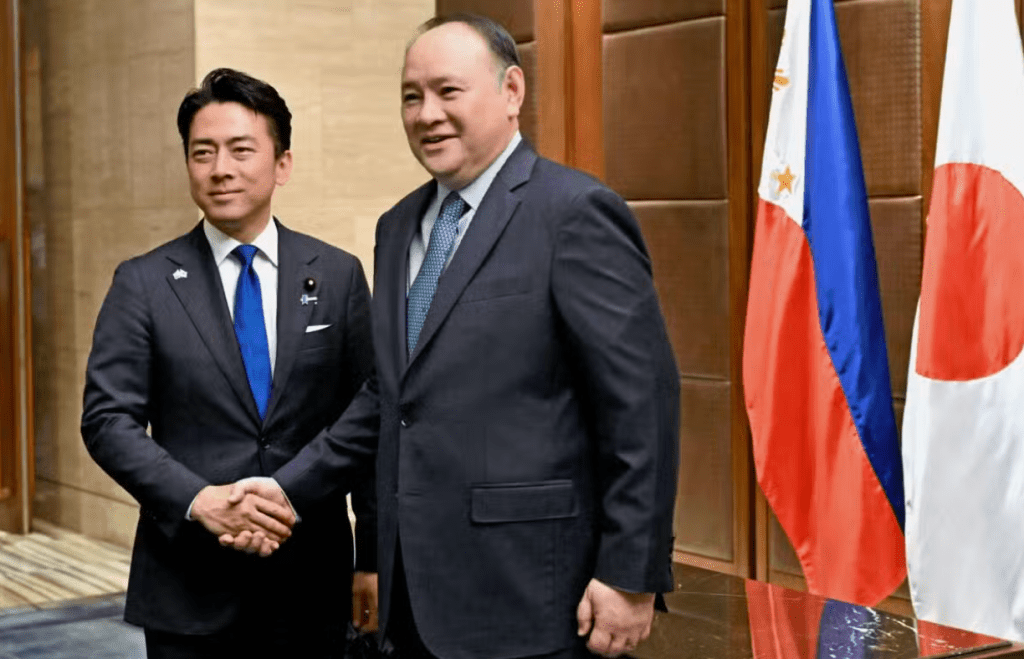
The agreement was signed on May 5, 2026, during a high-level meeting between Japanese Defense Minister Shinjiro Koizumi and Philippine Defense Secretary Gilberto Teodoro Jr. in Makati. The move follows Tokyo’s recent historic overhaul of its defense export rules, which now allows for the transfer of “lethal” equipment to key security partners.
At the center of the discussions is the potential “early transfer” of the Japan Maritime Self-Defense Force’s (JMSDF) Abukuma-class destroyers. These vessels are seen as a critical addition to the Philippine Navy’s fleet due to their specialized capabilities:
- Anti-Ship & Anti-Submarine Warfare: Equipped with high-performance guns and missile systems, these destroyers are designed to counter maritime threats and enhance territorial defense.
- Interoperability: Using common hardware will allow the Philippine and Japanese navies to coordinate more effectively during joint exercises and regional patrols.
- Potential Donation: Defense Secretary Teodoro indicated that the transfer could be a “giveaway” or donation, though official sources note that further legal arrangements in Japan are being finalized to allow for a free-of-charge transfer.
The newly formed working group will also coordinate the transfer of TC-90 training aircraft, which are already used by the Philippine Navy for maritime surveillance.
Minister Koizumi emphasized that the partnership is a response to “unilateral attempts to change the status quo” in the South China Sea and East China Sea. Both nations expressed deep concerns over increasing maritime assertiveness in the region, with Koizumi stating that enhancing Maritime Domain Awareness (MDA) is essential to maintaining a rules-based international order.
This defense pact is part of a broader surge in bilateral cooperation. Just last month, 1,400 Japanese personnel participated in the annual Balikatan exercises for the first time. Furthermore, President Ferdinand Marcos Jr. is scheduled for a state visit to Japan in late May 2026, where additional security and economic agreements are expected to be signed.
As the working group begins its technical sessions, the focus remains on the “soonest possible time” for the equipment to reach Philippine waters, marking a new era of defense technology sharing between the two East Asian neighbors.