
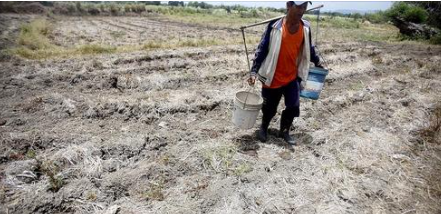

The Philippines is currently facing a “strong” El Niño event, which is expected to persist until February 2024, as reported by PAGASA (Philippine Atmospheric, Geophysical and Astronomical Services Administration). This prolonged climate phenomenon has significant implications for the country, prompting calls for preparedness and mitigation measures.
El Niño, a recurring climate pattern involving changes in the temperature of waters in the central and eastern tropical Pacific Ocean, influences weather systems globally. According to PAGASA, the majority of global climate models suggest that this El Niño will likely continue through the March-April-May 2024 season, eventually transitioning to an ENSO-neutral (El Niño Southern Oscillation) state in the April-May-June 2024 season.
The impact of El Niño in the Philippines can be profound, affecting agricultural production, water resources, and increasing the risk of fires and droughts. PAGASA’s advisory is a call to action for government agencies and the general public to implement precautionary measures to mitigate these adverse effects.
The onset of this El Niño was declared by PAGASA in July 2023, and its expected duration marks it as a significant climatic event. In response, President Ferdinand “Bongbong” Marcos Jr. has indicated a restructuring of the Task Force El Niño, aiming for more extensive measures to address the challenges posed by this phenomenon.
This extended El Niño underscores the importance of climate resilience and adaptive strategies in the Philippines, a country frequently affected by various natural phenomena. It calls for concerted efforts from all sectors to navigate the challenges posed by this prolonged climatic event.