
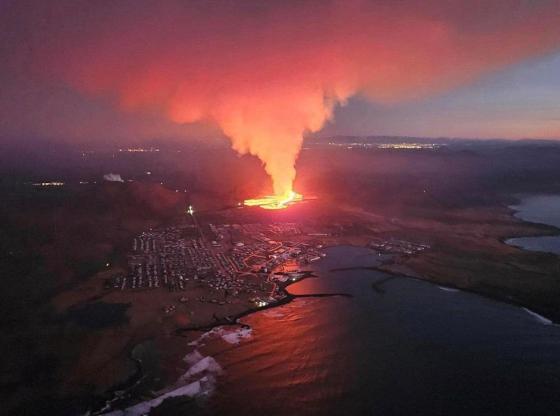

Iceland witnessed a dramatic natural event as a volcano erupted in the southwest region, presenting a looming risk to the nearby small fishing town of Grindavik. This eruption, which started early on Sunday, was preceded by the evacuation of the town, ensuring no lives were in immediate danger. However, the unfolding situation has posed a significant threat to infrastructure and has drawn widespread attention.
The eruption, characterized by spectacular fountains of molten rock and a bright orange glow against the dark sky, has been captured in early-morning video footage. Iceland’s President Gudni Johannesson took to social media to assure that while no lives were at risk, infrastructure could be under threat. Remarkably, there have been no interruptions to flights despite the volcanic activity.
The town of Grindavik, home to about 4,000 residents and located approximately 40 km southwest of the capital Reykjavik, had been evacuated for the second time in a month due to seismic activities signaling the imminent volcanic eruption. The Icelandic Meteorological Office (IMO) reported that lava was advancing towards the town, having breached the barriers built to protect it. This development raised concerns about the potential impact on the town.
This eruption is the latest in a series of volcanic activities on the Reykjanes peninsula, marking it as the fifth outbreak since 2021. Unlike the 2010 eruption of the Eyafjallajokull volcano, which caused widespread air travel disruptions due to ash clouds, the Reykjanes volcano systems are not under glaciers, reducing the likelihood of similar ash clouds.
Iceland, situated between the Eurasian and North American tectonic plates, is known for its seismic and volcanic activity as these plates move in opposite directions. This geological setting makes the country a hotspot for such natural events. The recent eruption near Grindavik is a vivid reminder of the dynamic and often unpredictable nature of Iceland’s geology.