
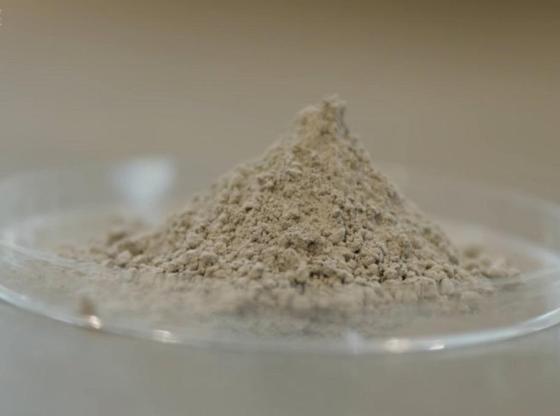

PARIS — On Wednesday, researchers announced a significant milestone in the fight against climate change: the development of a method to produce zero-emission cement. This advancement addresses one of the most challenging environmental issues—how to continue cement production while drastically reducing its carbon footprint.
A Pioneering Achievement by Cambridge Engineers
In a groundbreaking effort, engineers from the University of Cambridge have demonstrated that cement can be recycled in an environmentally friendly manner. This innovation does not carry the heavy carbon costs associated with traditional cement production.
Why is This Important? Cement is a critical component in concrete, the world’s most widely used construction material. However, producing cement is incredibly carbon-intensive, with the industry responsible for more than triple the emissions of global air travel. As urbanization and infrastructure demands continue to rise, finding a sustainable solution for cement production is crucial.
The New Process: Inspired by Steel Recycling
The Cambridge team has adapted a process from steel recycling to create recycled cement without the typical CO2 emissions. This method involves using electric-powered furnaces, similar to those in steel recycling, but substitutes a key ingredient with old cement sourced from demolished buildings. This innovative approach eliminates the need for superheating limestone, a process that generates substantial CO2 emissions.
Julian Allwood, a co-author of the research published in Nature, highlighted the transformative potential of this method. Allwood, an expert on industrial emissions and a key contributor to UN climate change reports, stated, “This discovery could provoke an absolutely massive change by providing low-cost and low-emission cement at scale. It is an extremely exciting project with the potential for a huge impact.”
Addressing the Cement Industry’s Carbon Footprint
The cement industry is a major contributor to global CO2 emissions, accounting for nearly eight percent of human-caused emissions—surpassing the emissions of any country except China and the United States. With 14 billion cubic meters of concrete cast annually, and even more needed as global economies and cities expand, the industry’s carbon footprint is a significant concern.
The International Energy Agency has warned that if cement industry emissions continue to rise, achieving carbon neutrality by 2050 will be nearly impossible. Traditional efforts to create low-carbon or “green” cement have faced challenges in scalability, cost, and technological feasibility. Many of these methods do not achieve zero emissions.
The Cambridge Solution: A Low-Disruption Innovation
The Cambridge researchers’ approach stands out because it involves minimal changes and costs for businesses. The method, which is currently patent-pending, can be powered by renewable energy, potentially leading to the production of zero-emission concrete at scale. Allwood emphasized that once electricity generation is free from emissions, this cement production process could also be emission-free.
“This is the big bright hope, I think,” Allwood remarked, emphasizing the potential of this innovation to help countries achieve their CO2 emission reduction targets under the Paris climate agreement.
Implications for Global Climate Goals
The ability to produce zero-emission cement could be a game-changer in the global effort to combat climate change. As the world grapples with the need to reduce carbon emissions across all sectors, this breakthrough offers a viable path forward for one of the most challenging industries.
Conclusion: A Step Towards a Sustainable Future
The Cambridge engineers’ achievement represents a significant step towards sustainable construction practices. By recycling cement in a manner that avoids the high emissions of traditional methods, this innovation not only addresses a critical environmental issue but also paves the way for greener urban development. As renewable energy becomes more widespread, the potential for zero-emission cement production could transform the construction industry, making a substantial contribution to global climate goals.